



In the wake of my recent conversation with my friend J.D. Huitt, the host of the excellent History Underground YouTube channel, I’ve received a few emails and witnessed a good amount of discussion has come up on the Reddit posts linked to the episode. The first thing worth bringing up is a correction that a listener was kind enough to direct me toward, which involved the story J.D. and I discussed about the anti-Israel demonstration at the Sydney Opera House back in October 2023. According to the New South Wales police, the claim that protesters were chanting “gas the Jews,” didn’t hold up under closer scrutiny by an “eminent expert,” as reported by The Guardian back on February 2nd, 2024. Instead, the expert concluded, the protesters were chanting, “where’s the Jews?” While certainly not as deeply unnerving as the previously-believed claim (and there are obviously many people disbelieving the conclusion) chants of “where’s the Jews?” doesn’t exactly fill me with much relief, especially since it pretty closely resembles the chants that we heard in Dagestan during the near-miss-pogrom on October 29th, 2023. Nevertheless, there is certainly a qualitative difference between the two chants and it is absolutely worth pointing out the results of an investigation that neither J.D. nor myself were aware of when we had our conversation (and having re-watched the footage, I can definitely hear “where’s the Jews” being shouted).
In addition, as another kind listener notified me over on Twitter/X, J.D. and I didn’t even touch on the very dark reality of Holocaust denial in Muslim majority countries, particularly in the Middle East. This was arguably an oversight on my part, but J.D. and I were planning to discuss the trend in the West more broadly and in the United States in particular, since it was something we had discussed previously. While this could be the soft bigotry of low expectations on my part—i.e. “of course those angry Middle Eastern Muslims would deny the Holocaust, so why belabor that point?”—I’ve also been planning to discuss this trend in the final episode of the Muslim Nazis series by examining to what extent the events of that story tie into this reality. Regardless of when this trend of Holocaust denial will be discussed by me, however, I think it is definitely worth noting that Holocaust denial is such a big problem in the Middle East that one could call it an endemic one (though according to one source I found, it’s apparently getting better; that may have changed since October 7th, 2023, but it’s worth pointing out). Most infamously, Iran’s former president Mahmoud Ahmadinejad said in 2009 that the Holocaust is “an opinion of just a few,” and that the Holocaust was “a lie and a mythical claim.” Egypt’s Muslim Brotherhood leader Mohammed Mahdi Akef expressed similar sentiments in 2005, proclaiming that “Western democracies have criticized all those who adopt a view different from that of the people of Zion about the myth of the Holocaust.” And as early as 1982, the PLO’s famed leader, Mahmoud Abbas, wrote in his doctoral thesis (and later his book The Other Side: The Secret Relationship Between Nazism and Zionism) that the six million figure associated with the Holocaust was “inflated.” As of January 2023, only the United Arab Emirates has opted to teach the Holocaust in its schools, and generally speaking, a lot of Arabic media has been replete with Holocaust denial in the past couple of years. So it is safe to say that however bad things are in the West when it comes to Holocaust denial, it’s far worse elsewhere (and perhaps understandably, depending on your disposition; I don’t share this view, but I can understand why Arab nationalists and Islamists might be eager to use anything they could to denigrate and insult Jews when their entire ideological being is defined by the events of 1948). In any case, there is likely more to say on this subject, but that will have to wait for the series finale to which I’m edging ever closer.
Finally, the discourse on Reddit pointed out some interesting potential issues with the question of Holocaust education. While I think J.D. would be the first to agree with me that our contention is not about the quantity of education, but rather the quality of it (making the question of how to address that quality an open one I hope to get into here), I think it’s worth pointing out some valid and thoughtful areas of dissent. Namely, a Reddit user pointed me to a pretty good article written in the Atlantic by literature professor and author Dara Horn back in April of 2023 (making it, like many things pre-October 7th in the world of Jewish-Gentile relations, eerily prophetic). While I’m not as thrilled with her conclusions as I’d like to be, Horn paints a starkly sad portrait of Holocaust education in the United States—namely in Illinois, state of the infamous neo-Nazi rally in Skokie and a true victory for the principle of free speech, but also in Dallas, and other places—where it is clear that the students visiting these Holocaust and genocide museums were not just internalizing the wrong idea about the Holocaust, but arguably being taught the wrong ideas about it. I also think she demonstrated that one of the most disturbing paradoxes of contemporary Holocaust education seems baked into the casual assumptions we have about people in our society when she writes:
[A] larger problem emerges when we ignore the realities of how anti-Semitism works. If we teach that the Holocaust happened because people weren’t nice enough—that they failed to appreciate that humans are all the same, for instance, or to build a just society—we create the self-congratulatory space where anti-Semitism grows. One can believe that humans are all the same while being virulently anti-Semitic, because according to anti-Semites, Jews, with their millennia-old insistence on being different from their neighbors, are the obstacle to humans all being the same. One can believe in creating a just society while being virulently anti-Semitic, because according to anti-Semites, Jews, with their imagined power and privilege, are the obstacle to a just society.
One might object to the idea that Jews can be seen as different when they are, in fact, human like the rest of us, but that’s exactly the point Horn is making. If you present Jews as the same as everyone else, you are essentially engaging in denial of what makes them targets to begin with: the belief that they are different; apart, alien. And let’s be real: teaching that? It’s really, really fucking difficult. At minimum, it requires a basic level of communicating metacognition—something that I suspect many teachers don’t even possess, much less their classrooms full of teenagers. The problem is, therefore, pretty obvious. The solutions, less so.
…
Dara Horn is correct to point out in her piece that it would be impossible to give any Holocaust museum the proverbial Dan Carlin treatment and cover the centuries of historical context of anti-Semitism itself and how it was used as the rocket fuel in Nazi racial ideology. But when it came to questions of how not to teach the Holocaust, I was truly taken aback by what Horn reports about what the Illinois Holocaust Museum and Education Center’s senior vice president of education and exhibitions, Kelly Szany (who is not Jewish, for what it’s worth; Horn points this out so I suppose I should too) had to say. I’ll let Horn’s summary speak for itself:
When I asked about worst practices in Holocaust education, Szany had many to share, which turned out to be widely agreed-upon among American Holocaust educators. First on the list: “simulations.” Apparently some teachers need to be told not to make students role-play Nazis versus Jews in class, or not to put masking tape on the floor in the exact dimensions of a boxcar in order to cram 200 students into it. Like many educators I spoke with, Szany also condemned Holocaust fiction such as the international best seller The Boy in the Striped Pajamas, an exceedingly popular work of ahistorical Christian-savior schlock. She didn’t feel that Anne Frank’s diary was a good choice either, because it’s “not a story of the Holocaust”—it offers little information about most Jews’ experiences of persecution, and ends before the author’s capture and murder.
Other officially failed techniques include showing students gruesome images, and prompting self-flattery by asking “What would you have done?” Yet another bad idea is counting objects. This was the conceit of a widely viewed 2004 documentary called Paper Clips, in which non-Jewish Tennessee schoolchildren, struggling to grasp the magnitude of 6 million murdered Jews, represented those Jews by collecting millions of paper clips.
Contrasting these examples with her own idea of “best practices,” Szany says that having the survivors speak is the best antidote. The impulse to let survivors speak for themselves is certainly a good one; I was fortunate enough to meet a Holocaust survivor in one of my classes I took dedicated to the history of the Holocaust (this one in high school; a rarity at the time [and perhaps even today], for sure). It’s one thing to read about the boxcars, the screaming and taunting German soldiers and their snapping dogs, and the terrified men, women, and children of all ages being shoved around, many to their eventual doom. It’s quite another to hear a woman in her 80s soldier on through her memories as she recounts them. But to pretend that this is enough—or, to use Szany’s pretentious language, “rescue individuals from the violence” (*gag*)—is woefully naïve at best, and, if I’m feeling particularly grumpy, just another indicator of a culture that sees victimhood as some sort of moral credential, rather than as a simple fact that is a small part of a larger picture of the human experience. As I see it, speaking to a survivor is either an amazing introduction or conclusion to an education in the Holocaust, but it will not be what sticks in the minds of students, especially if there is no frame of reference that students in 21st century America can understand. Holocaust educators (and Dara Horn, apparently) can believe that “it is demeaning to represent Jewish people as office supplies,” as was done with the paper clip exercise, but…what alternative is there, if you want to demonstrate an awesome scale that no one in their right mind could possibly conceive? Does it not also demonstrate the banality of evil, however flawed Hannah Arendt’s diagnosis of Adolf Eichmann ultimately was? Does it not help us understand the kind of people who would do these evil things, rather than just wallow in the suffering of those who went through them? (We’ll come back to this).
This is why I also need to ask with obvious frustration: do educators like Szany not understand that this kind of education, on its own, does nothing? That recitations of facts and figures, broadly speaking, do nothing to change minds? That people simply telling stories, however devastating those stories may be, is just another lecture (just one where you can’t goof off and you have to be more respectful), as far as teenagers are concerned? That merely presenting victims, who are simply passive actors in persistent horror whether we like it or not, is not something with which anyone can truly connect? And that without an emotional core—without something that we feel in the very depths of our souls—nothing is remembered? I mentioned to J.D. in our conversation that, apart from that Martin Amis adaptation The Zone of Interest, I couldn’t remember the last Holocaust film that had been released, much less one that had made as much of a meteoric cultural impact as Schindler’s List did in 1993. I bring this up because, much as I appreciate Schindler’s List and The Pianist, I will never forget the raw, emotional punch-to-the-gut I was given by the 2002 film, The Grey Zone.
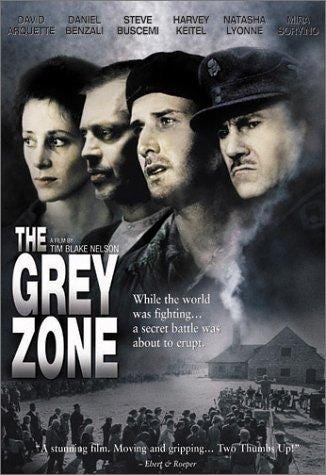
If you’ll pardon a “quick” aside, I have tried to articulate why I love The Grey Zone so much to so many people (including those skeptical by my appreciation since there are indeed problems one can find with its writing; it’s based on a stage play, and it sometimes shows). I searched high and low for a clip of the scene that truly got to me, and unfortunately, thanks to this film’s obscurity, it’s nowhere to be found, so I’ll do my best to describe it (though thankfully you can watch the film for free over on Crackle, if you can tolerate commercials; the scene in question is at around 1:16:30). We’ve been inundated with plenty of horror by this point in the film, but the character of Hoffman, played wonderfully by David Arquette of all people, delivers a devastating monologue paired with a montage of just what it was that the Sonderkommando did during most of their days; that is, loading corpses into ovens. We’ve seen Hoffman lie to his fellow Jews and even beat one to death over a watch, and by now we recognize that he and his fellow Sonderkommando are doing this to try and eke out as much earthly existence (and relative comfort) as possible before the Nazis kill them all and replace them with the next batch of willing collaborators. But Hoffman’s monologue, which begins with “I used to think so much of myself,” reveals something profound and terrifying: that no matter what we think of ourselves, we are all capable of anything (another thing Hoffman says) that we would find unspeakable—whether it’s being a Nazi at Auschwitz, or one of their doomed Jewish collaborators. That’s the central conceit of the film, and paired with the images of ghastly suffering and body disposal, it packs a punch no other Holocaust film I’ve ever seen does because it, correctly, condemns us all in a way very few artists engaging with the Holocaust (especially masters of sentimental schmaltz like Steven Spielberg, god love him) are willing to do.
The point of describing this experience that I had first watching The Grey Zone is to illustrate just how important the emotional impact was for me and why it worked. I doubt my interest in the Holocaust would be where it was without that film, and thus, I doubt my appreciation of its importance as a historical event would be even a fraction of what it is today. And it did that by forcing me to realize that the Holocaust—and really any genocide—is as much about the perpetrators (and their collaborators) as much as it is about the victims. And perhaps more disturbingly, that understanding the perpetrators is probably even more important than understanding the victims. Otherwise, we will be stuck on the treadmill of “not learning a damn thing,” to paraphrase one of the people Dara Horn interviewed for her article. This is something J.D. and I spoke about closer to the end of our conversation where we discussed how we thought to best teach the Holocaust in a way that the lessons would stick. The truth is, people will not internalize the horror of the Holocaust if we remain focused on the victims’ experiences and don’t give the perpetrators their due. There are a number of reasons for this and if you’ll indulge me—a total non-expert in pedagogy—I’d like to explore them.
…
First, let’s be blunt: no one likes to be a victim. Despite the culture of victimhood lionization in which we find ourselves, it’s a much more abstract position and one that only a very small number of people actually and sincerely seek out. There is a reason that despite this lionization of victimhood, there are still tips and coping strategies on popular websites for dealing with (and even diagnosing) a victim mentality. In short, victimhood—whether real or imagined—doesn’t really feel all that good. This is one reason that placing so much focus on the victims of history—not just the Holocaust—is fundamentally self-defeating. We may shake our heads, we may get angry, we may even cry, but at the end of the day, the victimhood of people many decades or even especially centuries ago is not what haunts us. I can cite all the evidence I want about people not resonating with victimhood, but I have my own personal experience to draw from. When I was researching the evil that took place in the Independent State of Croatia for the semi-recent episode of the Balkan Inferno trilogy, “The Heritage of Horror”, I was haunted less by the suffering felt by the victims of the Ustashe (though it was certainly upsetting), as I was by the casual and child-like cruelty of the perpetrators. I am willing to grant that I may be an exception, but I am willing to go out on a limb and suggest that thinking about what possessed and the men and boys to mutilate their Serbian and Jewish victims while they were still alive, and gloat about it while keeping pieces of them as keepsakes, is going to stick with me far longer than the horror felt by the victims, awful as that obviously was. I suspect that when students only hear about the victimhood experienced by the Jews or the Roma or whatever other historical victim, they may feel some things, but they will eventually place it in the back of their minds because, deep down, no one wants to dwell on victimhood, even if it’s someone else’s. There may be some displacement, but I truly believe that when you place someone in the mind of a normal person who did monstrous things (as opposed to a real monster like Josef Mengele) that will stick with them far longer. And there is a reason for that, which leads to the second and more crucial point.

That point is, placing ourselves, or being placed, in the shoes of the perpetrator of evil challenges something that most people believe: that we are good and decent people. Research bears this out; according to a survey of 2,000 U.S. adults conducted in 2021, 81% believed that humanity was inherently good, 75% believed they were themselves good people, and a whopping 46% believed they were themselves better than anyone else they knew. These numbers varied by generation (with “only” 55% of millennials believing in humanity’s general goodness), but the general picture is clear: by believing they are good people, most people don’t see themselves as capable of monstrous behavior. Further psychological evidence drawn from a 2019 paper in the Journal of Experimental Psychology, which found that “both children and adults viewed goodness in more essentialist terms than badness,” further supporting the idea that this idea of positive moral self-regard is, by its very nature, black and white. This perhaps provides the most significant explanation for why Holocaust education doesn’t stick in a meaningful way—by focusing on the victims and not the perpetrators, this positive moral self-regard is reinforced and the real lesson of the Holocaust is reduced to a simplistic morality play about bad people doing bad things to innocent people; in other words, a cliche.
If we are to be serious about teaching the “lessons of the Holocaust” (which, in reality, should be framed as lessons of human nature’s extremes), the illusion that human beings are inherently good or evil must be shattered. Young people need to realize that evil is evil because anyone is capable of it, including good, decent, normal people; as my friend Daniele Bolelli has said and as I’ve often quoted him saying it, human beings are neither inherently good or evil—human beings are inherently weak. A mere cursory read of Christopher Browning’s magisterial Ordinary Men: Reserve Police Battalion 101 and the Final Solution in Poland confirms this not just to be the case in an extreme circumstance, but in the very circumstances central to the question Holocaust education. Placing primary focus on the suffering of victims without forcing students to identify with the perpetrators—such as reducing the suffering of those victims to sorting paper clips—does nothing except cause the student to glaze over. Placing the focus on the people who did, enabled, and tolerated these things—through simulations, exercises, and discussions/debates—forces us to grapple with the true horror of events like the Holocaust. These people did these things. What makes you think you wouldn’t?
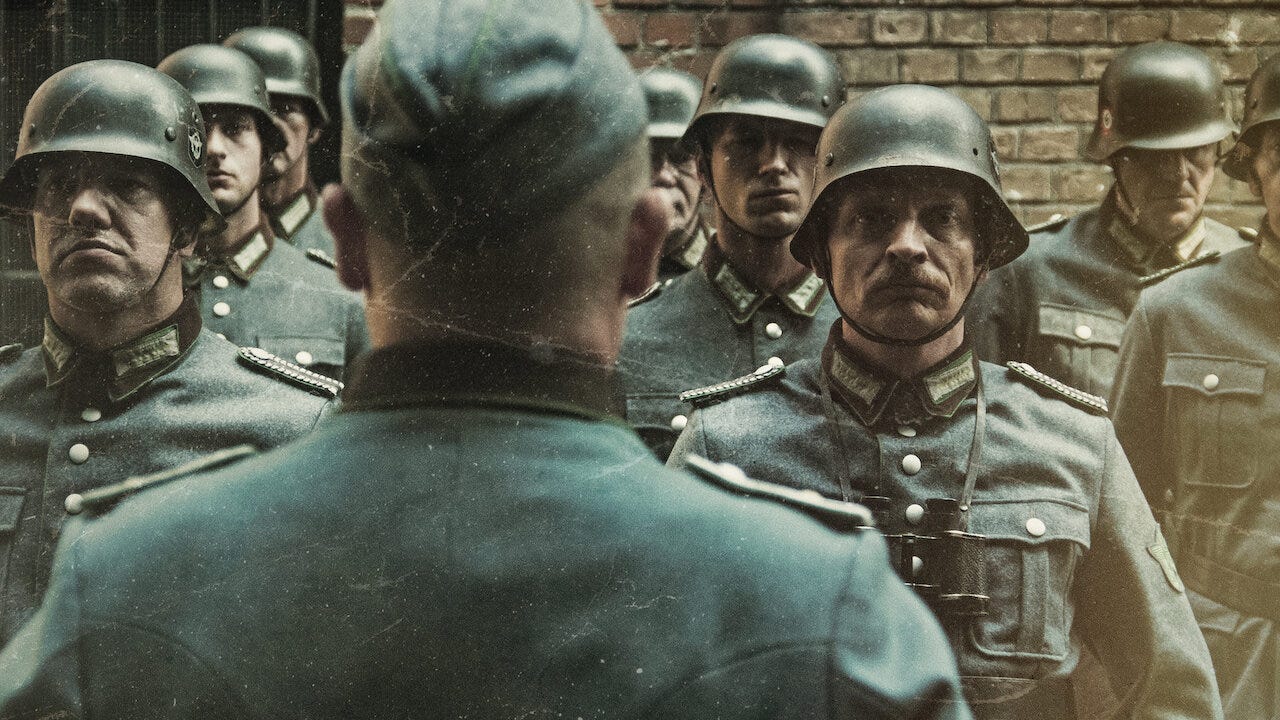
Some reading this (and likely many designing the curricula surrounding Holocaust education) may balk at this notion, believing (or worrying) that making students identify with the perpetrators will make them more sympathetic to evil and thus, I don’t know, more likely to commit evil? That smacks of the old “video games/violent media causes violent behavior” canard of the 1990s and 2000s. Again, because most people (especially young people, as pointed out in that Journal of Experimental Psychology paper) believe they are inherently good, this is unlikely. Or, perhaps, there is a more practical resistance to teaching the Holocaust in such an upsetting way: no one wants to go out of their way to upset kids in such a way. But here’s the thing: the Holocaust is upsetting. You can’t make it not be. It was the deliberate and methodical destruction of over 10 million people, including Jews. What this kind of reticence thus suggests to me is that protecting children from the upsetting revelation that all people—good people included—are capable of extreme evil is actually just as much, if not more, about protecting the feelings of the supposed adults in the room. Adults—again, 75% of whom believe they are good people—don’t want to disturb the illusion that people are inherently good any more than they want to disturb it for children. But if these adults believe that the Holocaust is or should be teachable, they need to reconsider their approach and likely accept the consequences of short term emotional upset—for them, and for their students.
…
Like most things, the question of Holocaust education is one of trade-offs. The trade-off that at least the American education system has taken with their victim-centric approach should be, especially now, evident: a lack of interest, investment, and, thus, knowledge about the Holocaust, much less why it matters. This creates a void—in the mind, and arguably, in the soul. If we can’t realize the potential we all have for evil within ourselves, then it’s pretty easy to point fingers at everyone else (which, if the point hasn’t been belabored enough, is usually the first step whenever anti-Semitism rears its ugly head). Thanks to social media algorithms, this void becomes very easily filled with contrary opinions about the Holocaust, either because they come from equally uninformed people or more conspiracy-poisoned true believers.
This leads to one last point that I would like to believe would improve the outcomes of Holocaust education, especially if we started taking the more diverse approach in teaching it for which I’m advocating and perhaps the most controversial one. And that is, we need to stop morally condemning Holocaust denial or skepticism the way we have. I emphasize the word “morally” because I want to make it clear I’m still very much in favor of condemning the revisionist school of thought; I just don’t think adding a moral dimension to it, beyond one’s personal feelings of course, is particularly productive. In fact, it seems to me to be just the opposite.
I spoke to another listener via email earlier today who was expressing frustration with being unable to communicate with his Holocaust-skeptic acquaintances. This is understandably frustrating, especially for someone like me who values accuracy and truth—two qualities for which Holocaust revisionists do not have much regard. However, I don’t think they (or anyone like them, up to and including David Irving) are evil. Wrong? Yes. Insulting? Absolutely. But evil? Not so much. Generally speaking, I would not call Holocaust denial or revisionism “evil” as much as I would call it stupid and, when it comes down to it, extremely annoying. This is not only my attempt at keeping extreme notions like “evil” in perspective, but also to suggest a more pragmatic approach. I think maybe there is something to be said of making Holocaust revisionism less of an extreme moral taboo and keeping it rooted in the territory of being an intellectual taboo. Making something a moral taboo clearly does not disincentivize people from engaging in obnoxious performative skepticism that they really only do to feel good about themselves; I would argue, as both J.D. and I did in our conversation, that moral condemnation—that is, making something taboo—only invites this kind of irritating contrarianism. The truth is, there are people who like being seen as contrarian and even as anti-heroes. But here’s the thing: no one likes to be seen as stupid and annoying. This is what we’re missing when it comes to marginalizing people like this; they enjoy being told their immoral monsters because they’re blessed with the real truth as they see it. But if they’re seen and called out as actual credulous idiots? Perhaps given a little taste of online or even offline bullying for their stupidity? I want to be clear: I’m not saying that we should be bullying these people, persistently demonstrating that they’re idiots, and personally attacking them for being mentally unwell and (probably) ugly.
But I’m not saying we shouldn’t either.
A related (or maybe underlying?) question in teaching about the holocaust, which is perhaps unique to Israel (but not necessarily) is that of finding the balance between the universal and particularist lessons of the holocaust. I mean, I understand your point about the educational value of focusing on the perpetrators rather than (only?) on the victims - especially in a sociocultural environment that is fixed on individualized victimhood that capitalizes on group identity. But this is quite problematic, to say the least, when most if not all of the pupils sitting in class are the grandchildren or great-grandchildren of the victims. I'm not making a theoretical counter-argument here about human nature but merely pointing out that the issue may not be, after all, whether the focus is on the victims or perpetrators. In my opinion, the emphasis should be on dynamics and processes - both particular (which covers the Jewish history/persecution of Jews throughout history) and universal (the circumstances under which people could be made into perpetrators). Understanding how people could do the evil things that they did does not and should not come to mean that there is no room to talk about why (a significant portion of) those evil deeds were specifically targeted at Jews. Such an approach would likely result in a better understanding of what genocide is, a more in depth and nuanced understanding of Jewish and Israeli experience and concerns, and hopefully also help in reducing the amount of cliche-wielding anti-zionists on social media that somehow manage to simultaneously deny the holocaust, glorify Hitler, and compare Israel to Nazi Germany.
And one last thing. In a previous post, Alex, you said that you didn't confront the person from your class who took down the hostages posters. Regardless of the specific circumstances you were in. If we are talking about hate, Jews, and enabling dynamics and processes - I'm genuinly curious if you have any reflections in terms of at what point do you intervene? When you see people harassing Jews on campus? When Israeli academics are openly discriminated against? When you see a person beating up someone for being a zionist?