


I hope you’ll pardon a more off-the-cuff reflection on my part here, rather than the usual deeply-researched material that appears on History Impossible. But like a lot of people out there, the 25th anniversary of 9/11 got me thinking about these things and I used that as an opportunity to try and get all of this out of my system. There are a lot of generalizations in here with which some of you might take issue, so please sound off, but please do NOT take this as me trying to sell you some kind of gospel. This is my own way of coping with the world in which we find ourselves (maybe turning 40 this year has something to do with it too). Anyway, think of this as a loose, semi-historical interpretation of the Millennial generation that may require a deeper, more properly historical analysis in the future.
…
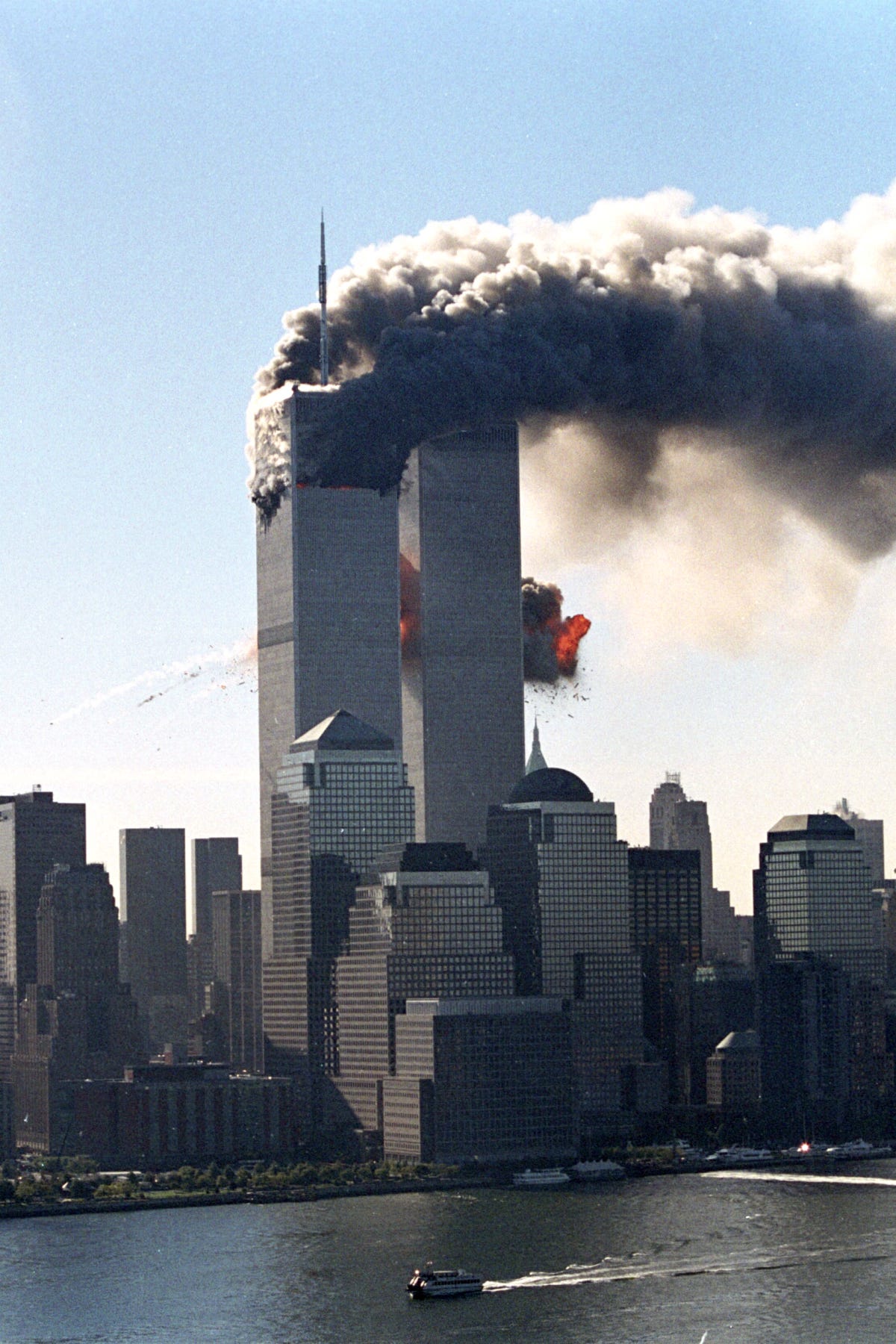
Like a lot of people out there in the world, I was trying to find a way to write about 9/11 on its inauspicious 25th anniversary. There really is not much to say, including where I was and what I was doing (for what it’s worth, I was 15 and walking into Spanish Level 3 and saw the TV on), that hasn’t already been said by so many people. But a corner of the discourse, particularly on Instagram reels (and likely TikTok) of all places, really piqued my interest, which is the disconnect between Zoomers’ perceptions of 9/11 and that of my generation, Millennials, particularly of the older vintage (freshly-minted 40 year old here!). Namely, the Zoomers apparently just don’t get it. They don’t get why there was such importance attached to that day, by Boomers and Xers, but especially with Millennials. And honestly, why would they? They were either in diapers when the Twin Towers fell or they didn’t even exist yet. We can’t expect them to understand, just as I am sure they can’t expect Gen Alpha (or whatever comes next, Gen Beta?) to fully grasp the enormity of the COVID-19 pandemic.
But this discourse definitely got me thinking about the historical place Millennials like me occupy, and how cultural markers existed during our childhoods and early adolescence. Namely, that it was largely an uninterrupted parade of optimism throughout the late 1980s and early 1990s. There were certainly problems and conflicts—no era of history is completely idyllic—but the 1990s in particular were a very positive time. It was the only time in my life that there was a budget surplus in this country, just to give you all an idea of how remote that time actually feels. But it was actually a time of innovation, particularly around technology, which Millennials were at the forefront of using. I remember my first dial-up modem connection at home—1998, I want to say—was remarkable. I remember using Google before there was even the “I’m feeling lucky” button. There was also a cultural renaissance, particularly with film (it’s not hard to get any cinephile going about 1999 and for good reason), but also with television (Star Trek was at its peak, and The Simpsons was creating a comedic vocabulary, to just name two titans). Music was exciting, and always feeling fresh and new; grunge, pop-punk, alternative, hip-hop, R&B, and electronic music changed everything.
Obviously, again, a lot of this is nostalgia, but it’s also indicative of how the pre-9/11 world was something truly different than what came afterward. Because it was. 9/11 was not just a national trauma; it was a generational trauma, where we all realized our safety was no longer guaranteed. This is hardly an uncommon observation, by Millennials or otherwise. However, I part from the apparent consensus in that I think the traumatic process for Millennials began earlier than 9/11. Al-Qaeda’s attack on America was a significant moment, but for Millennials, I believe, it served as confirmation of something we already suspected for a few years. That was because in 1999, something unthinkable and seemingly unprecedented occurred. That is, the mass shooting at Columbine High School.
Mass shootings did not begin at Columbine, it should be said. In fact, the first reported school shooting was in 1840, when the law professor John A.G. Davis was assassinated by a student taking part in the riots occurring at the University of Virginia. But Columbine was different, largely because of the media coverage, but also because of the scale and the mythos that began to surround the event. While it took many years for the reality of the Columbine shooting to emerge—namely that the main perpetrator was a true psychopath with annihilationist tendencies, and his buddy was largely just a lost loser along for the ride—the response to the mass killing was one dominated by external explanations. It was the music the killers listened to (usually claimed to be Marilyn Manson, though the killers had no interest in his music). It was the violent video games they played (it’s true they played Doom, but they became fixated on mods that replicated their future crime after they decided to commit that crime). It was the lack of meaningful security at school. It was access to firearms. It was literally anything that had nothing to do with the reality of the situation, which was the fracture that existed in the killers’ minds. No one (or very few) could face that possibility, so the blame turned outward, and Millennials, largely encouraged by media coverage and their parents’ worries, came to believe however subconsciously that even the relatively safest place outside of home, that is school, was a potential combat zone.
We lived with that perception every day for the three years that followed Columbine. Emergency procedures in the case of such an event were drilled into school staffs. In early 2001 when I was a freshman, my high school experienced a bomb threat and despite the incredibly flimsy evidence that the threat was actually real (it turned out it wasn’t), all 2,000 students were evacuated across the street to the YMCA gymnasium within 15 minutes. The teachers were well-prepared, and the chaos one might expect from a bunch of teenagers being told they didn’t have to go to class for the rest of the day was minimal. It was a really fun day and everyone was in good spirits, but that was because we had internalized the potential threat. We’d had three years to do so. But that threat was still confined to one thing: schools. The trauma of the Columbine mass shooting was a disruptive force, and it affected the wider culture for sure, but the threat remained relatively contained. That all changed on September 11, 2001.
To say 9/11 changed everything is an understatement. Outside of the school setting, things previously taken for granted—freedom from mass surveillance, freedom from buffed up state security apparatuses, and freedom from rampant and performative patriotism, to name just a few—quickly became normal. War was no longer an abstract idea or something that would conjure memories of the smashing 100-hour victory of the Gulf War and instead became tethered to the cultural memory of the Vietnam quagmire, thanks largely to war-skeptical Boomers. Millennials, at least those old enough to vote, were now the fighting generation and there was a very real, if ultimately deeply misguided fear of a resurgent military draft, especially after coalition forces engaged with Iraq in 2003. Dissent against that war took on a new meaning, but in my memory, it was mostly driven by the aforementioned Boomers tapping into their own experiences with Vietnam, and less by a bubbling awareness by war-anxious Millennials at the grassroots. I’m not saying Millennials were manipulated into being war-anxious—as the bodies of American servicemen began to pile up, it became a very reasonable concern—but the Boomer-driven anti-war rhetoric certainly fed into and off of that concern.
The best way to illustrate the post-traumatic malaise that began to fall over Millennials in the years following 9/11 is not to point to large-scale geopolitical developments, but rather, to look at the culture we consumed. While there were certainly exceptions, some of the most popular films of the era, especially produced after 2003, were relentlessly pessimistic, cynical, or otherwise dark, seeming to peak in 2007 (contrary to the fans of 1999, the best year for films in my lifetime, if you ask me) with releases like Zodiac, The Assassination of Jesse James by the Coward Robert Ford, Michael Clayton, Gone Baby Gone, There Will Be Blood, and No Country for Old Men all plunging us into some of the bleakest views of the human condition seen in films since the heyday of the late 1970s. Music popular with Millennials, particularly those who had dabbled in the 90s and early 00s incarnations of the goth and punk scenes held over since the 1980s, took on a similar edge, if only in aesthetics. I haven’t bothered to look at the actual numbers, so forgive me if I’m wrong, but I find it hard to believe that Hot Topic did not see its best years in sales from around 2001-2008. The rise of emo and screamo bands—known for trafficking almost exclusively in a kind of anguish—as well as the persistence of hard industrial rock and angry punk music were a testament to this. Look no further than Gerard Way directly citing 9/11 as the inspiration for him to quit his illustration job to form his monumentally successful pop-punk/screamo band My Chemical Romance.
Culture in the 2000s, even at its brightest, always had a harder edge. Even the sun-dappled underrated soap drama masterpiece The O.C. rarely paused in its indulgence of teenage characters grappling with alcoholism and drug addiction, suicidal stalkers, and even attempted murder. This was also the height of cynical turptitude with shows such as Law and Order: Special Victims Unit, where the monster-of-the-week formula pioneered by The X-Files in the 1990s was copy-pasted but with the twist of “depraved sexual crime of the week.” And lest we forget, this was the era of self-destructive reality and competition shows like Fear Factor, The Swan, and the beginning of the nightmare we call the Real Housewives franchise. The point was always, seemingly, the same: people are vile animals—how can we dispute this? See with your own eyes!—and no where and no one is safe.
This isn’t to say that Millennials were all miserable. While one shouldn’t necessarily generalize too readily, it’s safe to say that most of us weren’t beyond the usual angst that accompanies adolescence. We were in high school and then college, and despite all the disruptions that 9/11, the War on Terror, and the Iraq War had wrought, the world kept turning and adulthood was fast approaching. For a clear majority of Millennials, college was a foregone conclusion. It was a logical continuation of the education we were receiving even as the world seemed to fall apart after the Twin Towers collapsed. This was before—right before—the 2010s bloat of higher education administration, Title IX overreach, and the rise of safetyism. Individual expression and freedom were still at a premium, and we all believed that our personal development was just part of the process, enabled by the collegiate experience, of becoming gainfully employed adults. Then the autumn of 2008 came around and the “Great Recession” we had been hearing about for around a year finally reached its apex, just as many of us graduated from school and matriculated into the job market that was supposedly waiting for us.
The generational trauma associated with the Great Recession was different than the ones felt immediately after the Columbine massacre and 9/11, in that it was more slow-moving and one that Millennials began to discover for themselves on an individual level, as opportunity after opportunity for gainful employment disappeared, especially for those of us who saw fit to pursue a degree in the liberal arts. Given the proliferation of memes out there about “feminist puppet theater” majors and the like, it might be surprising to learn that the degree itself was what was supposed to matter, not the area of expertise we studied. While my own degree—psychology—was plenty useful, especially if I deigned to try and continue my education, I knew many others whose own degrees were woefully inadequate to face the job market, and who simply reentered academia as students to weather the economic storm. It might have worked in the short term, but many were not spared from the economic devastation that awaited us, and the downstream effects continued for the next several years.
Employment certainly bounced back as the years went by, thanks also to the rise of the gig economy, but a third painful lesson about perpetual uncertainty and danger was being drilled into the heads of Millennials in the late 2000s and early 2010s thanks to the Recession. The mileage on how well we rode this period out varies of course, but the explosion of late 00s/early 10s party culture helps reflect our desire to live in the moment and not concern ourselves with the potential consequences for pounding shots, snorting powders, and swallowing pharmaceuticals of which our parents’ generation could only dream. The irony of engaging in risky, perhaps even nihilistic behavior while also being imbued with the sense of the world’s danger is not lost on me, but it’s not an uncommon coping mechanism. Thus, if anything, it adds weight to the notion that we were a generation that identified itself with subsequent mass traumatic events. As best I can tell, this helps explain a lot of cultural trends that began to become mainstreamed as more and more millennials entered the workplace, including radical redefinitions of “harm” and “justice.” Such things, I wager, would not have taken on such a radical purchase if the world the Millennials believed they were promised had not changed the way it did; after Columbine, after 9/11, and certainly after the Great Recession’s downstream effects, the last of which simply seemed to be the final confirmation of everything we had come to believe about the world.
Every generation “loses it innocence,” in one way or another. For the Greatest Generation, it was the Great Depression and World War II. For Boomers, it was the killing of JFK (and arguably to a lesser extent, the Manson murders). But for Millennials, we had a trilogy of traumas (plus a good epilogue), and none of them seemed to have a silver lining. The Greatest Generation saw unprecedented wealth creation. The Boomers further reaped those benefits and were largely able to replicate them and instill that optimism in their progeny, however misguided it was. But for Millennials, everything just seemed to get worse. I don’t want to make too much of these traumas or start engaging in the unearned, performative pessimism that has become such a tiresome shorthand among many of my cohort. But I do understand such sentiments. The supposed norm of school shootings, the greatest attack on American soil by a foreign power since the War of 1812, and the greatest financial crash of living memory were very effective at embedding within the generational psyche that no one was safe and there was no light at the end of the tunnel. By the time the COVID-19 pandemic hit, there was less shock than there might otherwise have been. The pandemic and how our government handled it was just further confirmation of what those previous traumas suggested was the nature of existence.
As annoying and even dangerous I find “trauma discourse,” I actually find it less surprising as a trend when I think about the historical events that punctuated the cultural gestation of Millennials. Similarly, the meme about Millennial drinking patterns and drug use being, well, kind of crazy makes a lot more sense. Not as an excuse for these things, but as an explanation for the mindset that drove so many of us to those behaviors and outlooks. Unfortunately, though, I do believe it also inculcated within us a fatalistic attitude that has robbed many my age of the ability to meaningfully take ownership over our lives and express real agency. It’s not that Millennials were coddled, it’s that many of us became convinced that the world happens to us, rather than the reality, which is that we engage with the world. Parenting and education play parts in this dynamic, for sure, but bad parenting and bad education simply reinforces the attitudes created by events outside of our control.
One can see how this has manifested long term with at least some Millennials, specifically those who feel the need to announce their desire not to have children as an act of selflessness. It’s usually paired with a vague invocation of “the world today” in so many words, sometimes supported with references abstract dangers like climate change, systemic racism, war and genocide, and now especially A.I., but with very little effort to meaningfully address the agency being enacted with that decision. My partner and I have been together for over 16 years, and she and I have no desire to have children. When this comes up in conversation, which is thankfully rare, one can sense a sort of excitement on the part of people who immediately assume it’s because we can’t bear the thought of bringing a child into “the world today.” For a while, I simply shrugged it off and let people believe what they wanted to believe about my and my partner’s decision, but I’ve come around to simply being honest: we are not having children because we don’t want to have children.
I have long suspected that the people who proclaim their desire not to have children for abstract, external reasons are actually kind of ashamed about not producing progeny. That is, of course, their business. But it reflects what I’m talking about when it comes to how Millennials have been affected by a full decade of traumatic events (to say nothing of the profound disruptions created by the COVID-19 pandemic) where it has conditioned many of them to believe not just that they have no agency, but that to believe one has agency is an exercise of dangerous naivete. One can see how this has fed into politics with very little trouble, spanning the entire political spectrum, with an ever-present acceptance of illiberal means at best and authoritarian prescriptions at worst. It is not worth relitigating 21st century American illiberalism here; there are far better places for that and the evidence exists in polls. The point is that the pillars of individual liberty—which are built in a belief in individual agency—have lost their appeal, and the reason for this, above all other reasons in my opinion, lies in mass psychological disposition. Any Psychology 101 class will teach you that dispositions have many ingrained aspects, but they are also conditioned over time. When an entire generation is conditioned to believe that nothing is certain and nothing is safe as a matter of course thanks to a rapid succession of generational traumas, such an outcome is hardly surprising.
As fundamentally dishonest, irritating, and, well, silly, as I find this rise of performative pessimism on the part of Millennials and the Zoomers rapidly following suit, I want to make it clear: I get it. My choice to not engage in such apocalyptic prognosticating was simply that: a choice. Admittedly, my natural contrarianism has played a part as well. I have been hyper-sensitive (one could say far too sensitive) to serious, complex concerns becoming social signaling trends for decades at this point. But it was not an easy choice to make, especially the longer I studied history and politics. As anyone who reads or listens to my work knows, there are some dark periods of history, where the human condition reveals itself to be little better than the kind seen with chimpanzee tribes in the wild. And yet, we aren’t chimpanzee tribes in the wild. We are subject to incredible forces much larger than ourselves—my fascination with pandemics and natural disasters in past episodes should make it clear that I do accept this reality—but at bottom we are all the same: creatures capable of making choices, even if those choices are bad ones.
The idea of a coddled generation or two doesn’t scare me; the idea of a generation that believes we can’t make any meaningful choices for ourselves without being destroyed is an idea that does. As Cormac McCarthy wrote in Blood Meridian, we look out at the world as see “a land of some other order out there whose true geology was not stone but fear.” But McCarthy wasn’t saying that we need to despair at the darkness of that vast, uncaring universe to which we are all subjected. He was invoking the awe that we should feel at that universe. With awe, one hopes, comes respect. And respect is a choice, and that respect allows us to engage with that universe instead of just cowering in fear and waiting for it to make our decisions for us.