


“Let us leave modern men to their ‘truths’ and let us only be concerned about one thing: to keep standing amid a world of ruins.”
—Julius Evola
“Mankind today is on the brink of a precipice, not because of the danger of complete annihilation which is hanging over its head—this being just a symptom and not the real disease—but because humanity is devoid of those vital values which are necessary not only for its healthy development but also for its real progress. Even the Western world realizes that Western civilization is unable to present any healthy values for the guidance of mankind. The leadership of mankind by any Western man is now on the decline, not because Western culture has become poor materially or because its economic and military power has become weak. The period of the Western system has come to an end primarily because it is deprived of those life-giving values, which enabled it to be the leader of mankind.”
—Sayyid Qutb
“You are dying. I see in you all the characteristic stigma of decay. I can prove to you that your great wealth and your great poverty, your capitalism and your socialism, your wars and your revolutions, your atheism and your pessimism and your cynicism, your immorality, your broken-down marriages, your birth-control, that is bleeding you from the bottom and killing you off at the top in your brains—I can prove to you that those were characteristic marks of the dying ages of ancient States—Alexandria and Greece and neurotic Rome.”
—Oswald Spengler
“Dear Hitler, I welcome you back with all my heart. You have been defeated, but in fact one should regard you as the real victor. There will be no peace in the world until Germany again takes first place. Your principal mistake was opening too many fronts, but everything is forgiven, for you are a shining example of belief in one’s fatherland and people. You are eternal, and we shall not be surprised if we see you again.”
—Anwar El-Sadat
…
On the eve of his controversial election as mayor of New York City, Zohran Mamdani had his fair share of critics. While some criticisms had more to do with his inability to sufficiently distance himself from his more inflammatory and just-plain-dumb previous comments and performances as well as his planned policies, there was a common thread with some conservative and right wing commentators. Namely, that Mamdani was not just a socialist, but a closet Islamist. Figures as prominent as Ayaan Hirsi Ali—herself a strident and long-time critic of Islamism and Islam itself—were more than willing to claim that Mamdani was “an Islamist clad in socialist garb,” as Ali stated on her X page. Figures like Sequoia partner Shaun Maguire went even further earlier in 2025, claiming that “Mamdani comes from a culture that lies about everything,” because “It’s literally a virtue to lie if it advances his Islamist agenda,” echoing simplistic claims of “taqiyya” that are often quoted by drive-by critics of Islam. This kind of commentary prompted a lot of criticism, including from opponents of Mamdani, mostly because it was largely seen as missing the point, to say nothing of being completely inaccurate and arguably even Islamophobic (in the case of Maguire’s commentary, rather than Ali’s).
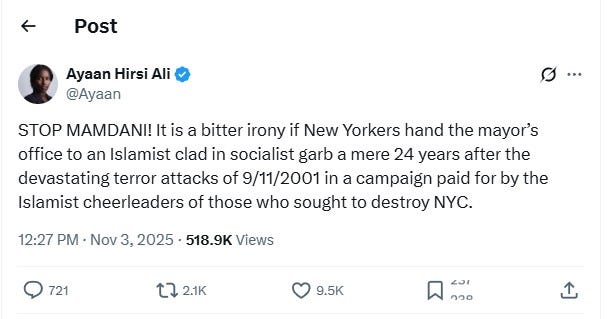
However ultimately untethered from reality this fear of a leftist-Islamist blob monster was, though, it was certainly understandable (especially from figures like Ali who have been on the proverbial Islamism beat for so long). As Sadanand Dhume at the Wall Street Journal pointed out in response to these claims of Mamdani’s plan “to establish a caliphate on the Hudson,” there is a troubling synergy that has been seen with Islamists and far left activists, particularly when it comes to the issue of Israel (and, often, Jews in general, though usually with the “Zionist” filter laying over everything). This has become well-covered territory, especially in the wake of the campus and street protests against alleged genocide preemptively launched while the bodies from the October 7th, 2023 pogrom were still warm. It has even received serious academic and think-tank treatment, with a report from the National Consortium for the Study of Terrorism and Responses to Terrorism being published in the journal Terrorism and Political Violence as far back as 2013. Even I, as many of you reading no doubt recall, took a stab and explaining elements of the newest incarnation this alliance via the soft imperialist strategy employed by Islamist groups, calling it their “Velvet Jihad,” as well as discussing it with spiked!’s Brendan O’Neill. However, I will defer to the renowned British-Israeli historian Robert Wistrich in summarizing both the contradictions, shared values, and ultimately obsessions in what he calls “the Red-Green Axis” in his tome, A Lethal Obsession: Anti-Semitism from Antiquity to the Global Jihad:
Islamists may sharply disagree with their […] Far Left allies about feminism, homosexuality, religion, secularism, and the validity of socialist ideals, but they share a common anti-Western, anti-globalist, and anti-Zionist agenda. Radical Islamists […] are not, of course, interested in the traditional class struggle of the proletariat. But like the Far Left, they hate America, revel in the myth of a Jewish world conspiracy, and are determined to eliminate Israel. Palestine is the issue where their cooperation with the Left is most harmonious.
In Britain, as in France, the anti-globalist Left and the Islamic fundamentalists also share a common rejection of liberal modernity and the entire Enlightenment project. Yet, ironically, both want to globalize the Middle East conflict, demanding “humanitarian” intervention by the wicked Western imperialists, if only to “stop Israel,” while at the same time threatening it with UN and EU sanctions. […] Nowhere is the morbid emotionalism and self-indulgence of a victim-centered culture more palpable than in the pro-Palestinian partisanship of the International Solidarity Movement.
Without question, the Palestine issue has become the omnicause for what passes as the left in the West in recent years, with the only globalization they support seeming to be the so-called decolonialization struggle. Even Mamdani himself made this clear when, in 2023 while speaking on a panel called “Socialist Internationalism: The Solution to the Crisis of Capitalism,” he claimed the following:
For anyone to care about these issues, we have to make them hyper-local. We have to make clear that when the boot of the NYPD is on your neck, it’s been laced by the IDF. We have to make, not specifically that example all the time, but just to say that for working-class people who have very little time, who have so many stresses, who are under so many pressures, there isn’t that much time for symbolism. We have to make it materially connected to their life. We are in a country where those connections abound, especially in New York City, you have so many opportunities to make clear the ways in which that struggle over there is tied to capitalist interests over here.
Clearly, when your chosen method of highlighting the alleged injustices by the Israeli Defense Forces is to “make them hyper-local” (and thus missing the point by citing a shared training exercises program that also included police forces from places like Jordan and Qatar, not just Israel, as part of the NYPD’s International Liaison Program), you are basically just inflating the importance of your own personal cause by marrying that cause to more global events and associations; hence, an omnicause. And given what active opposition to Israel has largely become in the last two years, it is clear that this cause has constituted an unholy marriage of values on much of the Western left. As Robert Wistrich further explains:
In the pro-Palestinian narrative of liberals and Marxists, remarkably little attention is paid to the crazed ideology, the poisoned culture of martyrdom, or the violently anti-Semitic hatred emanating from much of contemporary Islamism. Instead, terrorism and Islamist suicide attacks are explained away as a product of social conditions and the general misery induced by Israel’s policies.
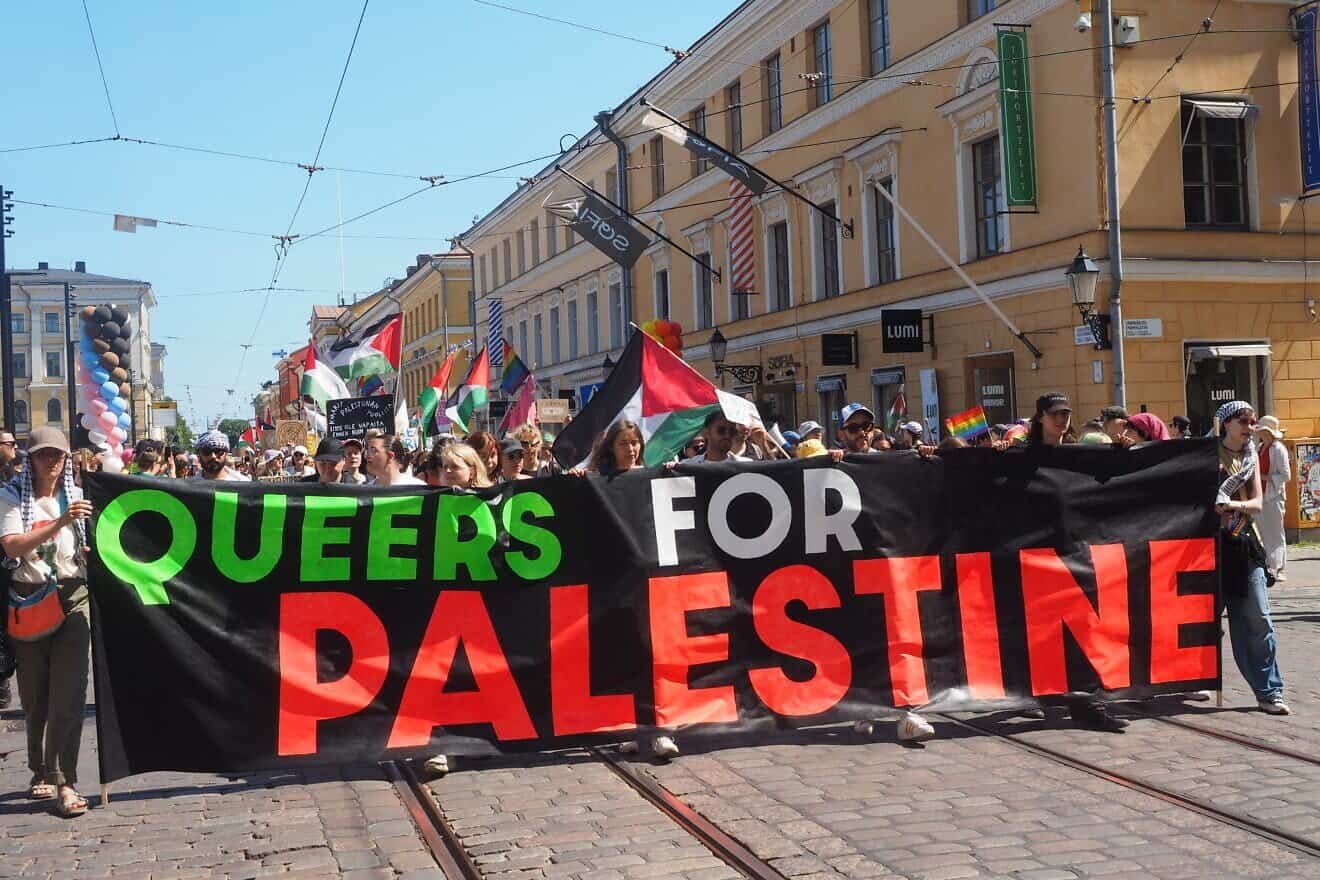
However, this marriage of values—that of functionally supporting a theocratic terrorist government and social progressivism—is built upon moral contradictions that have also been well-covered territory, including, again, by yours truly, over in the pages of Quillette. In other words, there really is no need to further litigate the self-evident absurdity of “Queers for Palestine.” There is plenty of well-written history covering the rise of the PLO and the leftist activists and terrorists who allied themselves with them during the height of the radical era of the late 1960s-early 1970s. Thanks largely to the resurgence of this strange Red-Green alliance in the wake of October 7th, this has, perhaps understandably, overshadowed the story of the other alliance with Islamism that has found a home the margins of Western society. In fact, as undeniable as it has become that there have been plenty of Western leftists willing to make common cause with Islamists, there is a sturdy history of the far right making common cause with Islamists.
In 2002, less than one year into the United States’ global War on Terror, the geopolitics professor Alexandre Del Valle (real name Marc d’Anna) coined a provocative term: “the Red-Green-Brown alliance.” Del Valle had been controversial in his assessments before, going so far as to claim that the United States was using Islamist organizations to destroy Europe in his first book Islamism and the United States: An Alliance against Europe, originally published in 1997. Outlandish as this claim was (and likely informed by Del Valle’s extreme hostility toward the Clinton and Reagan administrations in particular), Del Valle’s later assessment—that of an ideological alliance, however unofficial, between the far right, the far left, and Islamism—ultimately gained some legs thanks to its relative soundness. Far from claiming that there were some shadowy backroom deals being forged between representatives of the American Nazi Party, the Communist Party USA, and Hizb-ut-Tahrir, Del Valle was more interested in characterizing this phenomenon as “a convergence of totalitarianisms” (or a “coalition of long-time losers,” and a “syndicate of universal hatred,” as he put it in a later article). In other words, he was taking note where their usually divergent values overlapped, similar to Robert Wistrich’s “Red-Green Axis,” but with a greater ideological and intellectual scope. As Del Valle writes:
It is evident that Islamism, the third totalitarianism after Nazism and Communism, echoes to a definite extent the aspirations of its two predecessors: seizing the struggle of civilizations and religions, then declaring war on the Judeo-Christian world in the name of the “dispossessed” of the rest of the planet, Islamism seduces as much those nostalgic for the pagan Third Reich, resolved to eradicate Judaism and Christianity, as it does those partisans of the hammer and sickle, determined to come to blows with the “bourgeois” and “capitalist” West.
Continuing later, Del Valle writes the following:
From the outset, one asks oneself what could be able to unify movements as ideologically antagonistic as the Reds (atheists and materialists), the Greens (theocrats and Islamists), and the Browns (believers in the war of the races). To believe that such an alliance would be philosophically impossible and strategically improbable—and, therefore, from the get-go doomed to checkmate—would be to forget that Islamism is not only the third totalitarianism to come about, but is also equally, in a number of points, the inherited unifier of the two predecessors. Insofar as Islamism is not only simply a religious “fundamentalism”, but also and above all a subversive revolutionary totalitarianism, an ideology of mass destruction comparable to Nazism, Maoism or Stalinism, this “Green fascism” prolongs the anterior totalitarianisms. What distinguishes the Green version essentially is that it brings to the historical totalitarian hatreds a theological justification and a divine benediction.
Whether it concerns the Lebanese Hezbollah, Palestinian Hamas, the al-Qaeda combatants, or the Iraqi and Palestinian “resisters”, it must be recognized that in the marketplace of global revolution, the Islamists and the Arab-Muslim mujahedeen in general are the most effective and ferocious adversaries of “Israeli-American imperialism.” They are the ones who are inflicting the most damage on the “colonialist” and “capitalist” powers—whom the Reds and the Browns detest above all.
Being the third moment of totalitarianism, an avenging Islamism leading the assault on the capitalist democracies and the “Judeo-Crusader forces” knows now such an ascension throughout all corners of the globe and, in particular, in Europe—an ascension facilitated by the planetary and unprecedented mediatization which it has enjoyed since the shock of September 11—that it has been attracting, like a magnet, the attentions of those nostalgic for the communist and Nazi totalitarianisms. Drawing at the same time from the vulgate of the extreme right and from an “Islamically correct” template that is pro-Arab and Third Worldist, this new revolutionary and planetary hatred henceforth seduces the latest anti-Jewish and anti-American militants of the extreme radical right.
Del Valle has more to say about the formation of this alleged unholy alliance, but in short, when one examines the contours of the radical ideologies that inflame so much of modern political discourse, one begins to realize that the supposed contradictions within these radical ideologies matter less than their shared, broader visions of the world. War with one another can come later; in the meantime, they all have a shared enemy. And just as radical leftists and revolutionary Marxist-Leninists can leave aside their supposedly progressive social values and supposedly secular worldview to make common cause with theocratic Islamists, there are many radical right and self-styled neo-fascist dissidents who have just as little difficulty doing the same, all in the name of defeating their shared enemies, though there is almost always a single shared enemy at the center of this radical nexus.
The question of this shared enemy is not a mystery, because it has been the shared enemy of ideological radicals for well over a century, and arguably far longer if one looks at theological developments across time. To name this shared hatred has become, unfortunately, a bit of cliche destined to fall on deaf ears, but it needs to be stated: it is a hatred (or, perhaps more commonly, distrust) of Jews. It could be said that the skeleton key for radicals is the Jew—the “Eternal Jew,” as Goebbels might have put it—thanks to his rejection of Christ or the Prophet Muhammad, thanks to his murder of Gentile children, thanks to his stateless cosmopolitanism, and, now, thanks to his state-sanctioned genocide. The Jew has always been framed as “outsider,” and outsiders are often the greatest threat to a utopian project, whether it is a Christian, Muslim, nationalist, communist, or truly globalist one. This is why it is a mistake to place antisemitism in the same category as rank racism and more in the same category as conspiracy theory. The journalist David Reaboi recently wrote about this in Tablet Magazine while discussing what is appearing to be the newest incarnation of this strange radical alliance that we are about to discuss:
What unites these audiences isn’t ideology so much as a way of seeing. In this world, nothing happens by accident; every war, election, or scandal confirms the existence of an unseen hand. The more elaborate the theory, the more convincing it feels. [The current peddlers of this theory] didn’t invent this pattern; they inherited and updated it into a modern vernacular of globalist plots, unipolar elites, and “foreign lobbies.” The content changes, but the structure never does.
[This is] a cognitive map built entirely on lies. Yet most people, including many Jews, still describe antisemitism as “anti-Jewish racism.” That mistake is fatal. Racism begins with emotion; antisemitism begins with explanation. Its logic is counterfeit, but it poses as reason all the same.
This confusion has deep roots. After the civil-rights era, “hate” became the moral grammar through which all prejudice was understood. Jewish institutions, eager to speak that language, adopted it wholesale. Once antisemitism was redefined as an emotional or linguistic offense, its conspiracy core was buried under “tropes.” In that bucket, the falsehoods that launched pogroms and genocides—blood libel, world-Jewish control—were lumped together with trivial stereotypes.
The result was a flattening of meaning. Even the International Holocaust Remembrance Alliance’s official definition, adopted by governments and many Jewish groups, reflects this collapse. Its warning against “mendacious, dehumanizing, or demonizing allegations about Jews” treats antisemitism as a moral failure rather than an epistemic one.
Indeed, the more I have learned about antisemitism throughout history, the less it has appeared to me to be some strained social construct akin to racism, and more like a tradition. This is the tradition of conspiracy theory, and conspiracy theories are the bedrock of radicalism, whether we are describing religious or secular radicalism. Antisemitism is the bigotry that comes in with grand post-hoc justifications, rather than a bigotry that forms them on the fly; there is, in other words, a relatively robust internal logic to antisemitism, creating a vastly more powerful permission structure than your traditional colorist racism that we still occasionally see in the West. Its connection to social and religious tradition that goes back far further than Berlin in 1933 reveals its durability across time and ideology and thus helps explain its frequent role in unifying seemingly disparate ideologies, in creating this “Red-Green-Brown Alliance” described by Del Valle.
Much can be and has been said about the horseshoe theory of Western politics—the idea of a “Red-Brown Alliance,” which many socialists angrily dispute, perhaps doth protesting too much—and, as stated before, much more can be and has been said about the Red-Green alliance of late. However, the “Brown” prong of what Del Valle called the convergence of totalitarianisms has gotten far less play as far as commentary goes. There are many possible reasons for this, but it likely lies at the core of why there are many people who might scoff at the idea of a Red-Green alliance; it just seems too outlandish to assume that the Western radical right could ever possibly see eye to eye with Islamists on anything. And yet, as we will see, there is a robust history that shows precisely the opposite.
…

Much has been said about the controversial soft-ball interview Tucker Carlson gave to America’s most infamous Hitler-lover, Nick Fuentes, on October 27th, 2025, especially after the Heritage Foundation’s Kevin Roberts made a series of statements, none of which went over well. The ongoing fracture within the American conservative movement is interesting in and of itself, and will likely continue to be examined for some time to come as of this writing. However, Carlson—and by extension, Fuentes—both provide an interesting window into what the most recent Green-Brown Alliance may start to look like, if we are indeed witnessing its early days.
For example, on an episode of his program from May of 2025, Carlson, almost certainly trying to be provocative as a way to criticize the American healthcare system’s handling of the ongoing opioid crisis, claimed that “if you really want to be red-pilled,” one should learn about the Taliban’s “faith-based” approach to drug rehabilitation. And while it nothing to do with Islam, Carlson also seems to have an appreciation for what are ultimately theocratic and medieval values lately. Similarly, a clip of Fuentes began circulating where several people paying to have their superchat comments read live on his show complained of him taking a soft view on Islam and Muslims, to which he simply accused them of “just wanting Muslim hate, or something,” and of being, of course, “Jews.”
Putting aside these relatively minor comments’ salience to my own observation on the Green-Brown alliance—as well as the question of whether or not Tucker Carlson or even Nick Fuentes can be classified as traditionally “Brown” in this case, instead of just a garden variety incessant Jew-baiter and traditional antisemite, respectively—if one takes a more broad look at the wider, paleoconservative/paleolibertarian commentator class, one can start to see a common thread, especially regarding the Israeli-Palestinian conflict and who is being granted agency in their commentary that conflict (Israel) and who is being granted none (Hamas). This is not to say that any of these figures—including Carlson and Fuentes, despite their previously-cited comments—actually yearns for a victory of Hamas, or actually wants a theocratic Islamic state to replace our own (I would wager most of them actually would not). The same can also be said for most radical activists on the Western left also functionally caping up for Hamas across social media.
This common thread is not surprising because, again, it is never really about the actual cause believed in by one’s allies; it is always about one’s shared enemies. While the radical Western left believes in a vague notion of “decolonization,” the radical right believes in a vague notion of being “anti-war,” and the Islamist groups like Hizb-ut Tahrir or Hamas believe in the restoration of a caliphate or Islamic dominance over the Holy Land—all very disparate standpoints—all three groups share the same enemies: Israel/the Jews (which are rapidly becoming functionally synonymous), and, almost always, the United States and the West in general (at least as they currently exist). It is therefore not all that outlandish to call the radicals on the Western left and right functional allies of Islamists. And just as the functional allyship of various leftist groups has existed with Islamists for some time, so too has that allyship existed between radical right wing groups and individuals and Islamists.
Similar to the radical Western left, the radical Western right does not, at first glance, seem to be a good fit for making common cause with Islamists. There is always a preternatural paranoia about border security and even immigrants in general, to say nothing of what often veers into Western chauvinism and outright racism, and a disgust with all things foreign, with the people of Islamic countries often (though of course, not exclusively) being used as examples of who not to allow within Western borders. And yet, in his 2006 book, The Enemy of My Enemy: The Alarming Convergence of Militant Islam and the Extreme Right, the political science scholar George Michael explains that despite these tendencies of the Western radical right (and the tendencies of Islamists), “they actually share some strikingly similar characteristics.” Continuing, Michael writes the following:
Both movements evince a high degree of exclusivity as they endeavor to create their own utopian versions of homogeneous societies. Moreover, increasingly, there is a meeting of the minds on several important political issues—oddly enough, one example is the cause of Palestinian independence. The two also offer similar critiques of American foreign policy in the Middle East, the American media, modernity, secularism, and globalization. Finally, both movements see the U.S. government as hopelessly under the control of Jews or Zionists, pursuing policies that are at cross-purposes with their own group interests.
The key, Michael argues, for a meeting of the minds between the far right and Islamists is finding potential vectors for cooperation, particularly where perceived enemies overlap. In fact, according to Michael, “perhaps the greatest potential” has to do with my profession: that of history. More specifically, the greatest potential for cooperation between the far right and Islamists can be found with the phenomenon of historical revisionism, particularly when it comes to events like World War II and the Holocaust. As Michael explains:
There are several reasons why the prospect of cooperation between [the historical revisionist] segment of the extreme right and militant Islam is strong. First, the racialism in this segment tends to be muted and much less strident. Rarely does one read claims about the racial superiority of European-derived peoples or the racial inferiority of other races. Furthermore, non-Europeans, such as Afro-Caribbean scholar Tony Martin, have on occasion given lectures at revisionist conferences. Finally, there is a great congruence of interests in this field of intellectual endeavor because both militant Islam and revisionists are highly critical of Zionism.
While one can likely imagine several examples of this convergence of interests, especially the longer one spends in right wing corners of X, one of the most infamous examples of far right anti-Zionism comes from a particularly notorious Swiss Holocaust denier named Jürgen Graf. Graf’s first and most infamous book was Der Holocaust auf dem Prüfstand: Augenzeugenberichte versus Naturgesetze, or, The Holocaust on Trial: Eyewitness Accounts Versus Natural Laws, published in the early 1990s and co-authored with fellow Holocaust denier Carlo Mattogno. Thanks to this work and many others echoing similar themes, Graf was dismissed from his teaching position, giving him further credibility in the eyes of the revisionist crowd, where he continued to thrive until his death in 2025. According to Michael, who interviewed him for The Enemy of My Enemy, Graf “saw great potential for an alliance with Palestinians and their supporters, especially because any effort to discredit accepted views of the Holocaust would undercut the legitimacy of the state of Israel and, by extension, the larger international community of Jews.”

Graf was indeed an unrepentant antisemite, and a true Holocaust denier (not “just” a revisionist, though that is largely a distinction without a difference in this particular context), claiming to Michael that “the ‘Holocaust’ lie is but a rotten corpse,” just waiting to be disproved, despite “the fact that those who profit from these myths control the education system, plus the media, of the West.” While completely ostracized by mainstream historians for views and claims like these, Graf was able to help organize a conference called “Revisionism and Zionism,” slated to occur in Beirut, Lebanon, in the summer of 2001. The event ended up being cancelled at the last minute, but it was spearheaded by the Institute for Historical Review (IHR), probably the most infamous historical revisionism outfit thanks to its frequent laundering of Holocaust denial. The IHR was not content to simply distribute supposedly respectable pieces of Holocaust denial and skepticism; they sought to form foreign alliances and not just with fellow traveling European white supremacists. As Michael explains:
The IHR had interfaced with Muslims in the past; its director, Mark Weber, has been interviewed numerous times on Iranian state radio (Islamic Republic of Iran Broadcasting, or IRIB). According to some accounts, Arabs were among the first financial supporters of the IHR. Just prior to the founding of the IHR, it is believed that the government of Saudi Arabia funded the Holocaust denier, William N. Grimstad, author of The Six Million Reconsidered. And on some occasions, Muslims have addressed IHR conferences, including Issah Nakleh of the World Muslim Congress.
The IHR has long since lost any luster it might have once had and its circulation of paid supporters was already in the four-digit range as of Michael’s writing almost two decades ago. Nevertheless, the revisionism link between elements of the far right and Islamism continues to persist and has a rich tradition; even the infamous German-Canadian Holocaust denier Ernst Zündel (who was, appropriately, helped in court by David Irving in the late 1980s) once commented that “the poor Palestinians are the most abused victims of this ‘Holocaust’ propaganda tool.”
In modern times, however, the link the two worldviews goes beyond mere shared interests in denying or downplaying the Holocaust, and even becomes more specifically wedded to current events. This became especially clear following the pogrom of October 7th, 2023. As reported by Katherine Keneally and Zoe Manzi in their paper “Hate united: Neo-Nazi accelerationist support for Hamas,” there were a number of far right accelerationists—that is, people who wish to speed along the destruction of modern society so a newer, better utopia can be born from the ashes—on Telegram who “believe they share commonalities with Hamas and consider the Israel-Hamas conflict to be an opportunity to radicalize, recruit and inspire violence against the Jewish community,” going so far as to share what they believe are Israel’s critical infrastructure details for Hamas’ consumption on Telegram.1
In a way it is unsurprising that accelerationists see something to admire in Hamas; back in 2006, George Michael pointed out—accurately—that “since the 1980s, the extreme right has evolved from a movement characterized by ultrapatriotism to one increasingly characterized by nihilism.” Hamas, it has been accurately stated by many, is a death cult and has described themselves as loving death more than the rest of us love life. It is not hard to imagine how a hyper-privileged, insufferably bitter Western radical yearning for an apocalypse of the modern world could find something admirable in one of the most barbarically nihilistic organizations on the planet. Indeed, Keneally and Manzi make it clear that “inter-group support is not rooted in a common religious or cultural ideology but rather in uniting against a common enemy: the Jews and the ‘corrupt’ West,” and that accelerationists are fans of Hamas’ tactics, suggesting “that their guerrilla-style warfare is worthy of adoption and should be implemented by accelerationists in the U.S.” Despite different ultimate visions of the world, the researchers found that without question, “both ideology and methodology are in the spotlight as areas of potential convergence” for Islamist terror groups like Hamas and far right terror groups and individuals in the West. Again, shared hatred is often all that is needed to forget diverging visions of the future.
However, there have been figures on the far right who have gone even deeper with finding common cause with Islamists, going so far as to exhibit outright Islamophilia. The most famous recent example of this phenomenon recently was the streamer Sneako, who converted to Islam in 2023, but had been fashioning himself a far right provocateur for some time. However, a less famous, but far more significant figure serves as what George Michael refers to as the “Islamic-National Socialist synthesis” of our modern era. That figure’s name is David Myatt, and his is a fascinating story.

David Myatt’s strange position within the far right influencer network is made most apparent by his writings appearing on the website for the Aryan Nations’ Ministry of Islamic Liaison, whose stated goal is to establish “solidarity, to the bona-fide adherents of Islam in the Arabic world and abroad,” in their own words. He is less known outside of the UK where he is originally from, but over the years he gained a bit of a reputation as the leader of the underground paramilitary group Combat 18 in 1998 after the original leader was thrown in prison for murder. This murder had been part of a broader strategy of “attack[ing] left-wing bookshops, gay pubs, and anti-apartheid activists” in the 1990s, and there is little doubt that Myatt played a part in the terror, or, if one is to be more charitable, was fully aware of it. However, like a lot of self-described “seekers,” he became disillusioned with the movement, especially after it self-destructed from “internecine conflicts and government repression,” in Michael’s words, though he never let go of the Nazi ethos. Myatt sought new meaning from various avenues, including Taoism, Buddhism, Christian monastic life, and even pagan and Satanic secret societies, but eventually, discovered Islam and was entranced.
This discovery and enchantment did little to tamp down Myatt’s neo-Nazism; in fact, it only accentuated it. His “racial-ethno-nationalism,” as Michael calls it (or “neoracism” as Myatt himself calls it), interestingly does not apply a hierarchy to the races, but does emphasize the importance of “racial particularism” in the context of “cultural identity and self-determination,” in which “the various races of the world have different destinies, different abilities, and different ways of living that should be respected,” in Michael’s words. Yet, the West—that is, the New World Order, in Myatt’s parlance—was not included in this formulation and was, in fact, the corrupting force that did not allow for different ways of living that should be respected. And, of course, given his continuing neo-Nazi beliefs, there was a very particular group that helped orchestrate this corruption thanks to their supposed influence.
Myatt admitted to George Michael in one of their interviews that he was slightly opportunistic in his pursuit of Islam because he admired the militancy practiced by Islamist groups against what he saw as the enemy—that is, the New World Order. Yet again, the idea that he—an avowed National Socialist—and Islamists “shared common enemies, the capitalist-consumer West and international finance,” was enough to entice him. But unlike other far right activists and radicals simply seeing the value of shared enemies, Myatt took it a step further: he converted, taking on the Islamic name Abdul Aziz. This made perfect sense to him because, as Michael explains, Myatt believed that “something was terribly missing in the hearts of right-wing extremists.” There was something truly inspiring about jihad to him; the truly fanatical commitment of the soul. As Myatt explained:
I came to understand that what motivated the fighters I and others had discussed previously was an intense faith: a real belief in an after-life; a belief that it was their duty to act in such a way, and that by doing their duty in the way they did, they would be assured of entering Paradise. And this faith was not a political belief they had acquired or accepted in adult life: it was part of their very culture. Indeed, it was their culture, their tradition, and their way of life, from birth through death.
It was this type of faith, this immersion in one’s own culture, which our own people so sadly lacked. We were trying to motivate people in a political way, whereas Muslim fighters did what they did because it was accepted as their duty, as their own people understood this duty and gladly accepted their martyrdom.
Despite his deterministic and all-encompassing diagnosis of Muslim culture, Myatt was adamant that racial differences played little role in his thinking. In fact, he insisted that “the truth about National Socialism has been obscured for over fifty years, thanks to the intensive, hateful, worldwide, well-financed, and unending propaganda campaign directed against it,” characterizing the image of the Nazis we get from the historical record as “the stereotyped Marxist-capitalist image of a National Socialist.” He rejected any notion of being “a rabid so-called ‘racist’ who hated other races,” instead proclaiming that he “loved my own people, valued my own heritage, and wished to see the creation of independent homelands where different races and cultures could live in freedom according to their own customs.”
While this certainly contradicts the original National Socialist mission of Liebensraum, this type of modern day racial radicalism is common enough among those who would consider themselves racial separatists. Myatt did not believe that the well-established history of National Socialism—or the history imperialist militant Islam, for that matter—contradicted his worldview or, more importantly, that these worldviews would conflict with one another. This was, of course, thanks to his belief that we have gotten the history of the Second World War wrong, as well as our Western understanding of Islam, but it was also because he believed that there was more than enough kinship between the faiths. As Myatt explained in his interview, “There is some common ground, since both ways—when correctly understood—produce civilized, honorable individuals who use reason as a guide.” However, he started to notice contradictions as he attempted to create something akin to, in Michael’s words, “‘Aryan Islam,’ in which Aryan culture and identity could be expressed in the confines of Islam.”
Eventually, Myatt—a very intelligent man, it should be noted, with a reported IQ of 187—conceded that, at least for him, there were too many contradictions between Islam itself and his vision of true National Socialism, which he saw as more tied to folk culture (that is, culture of the Volk) and, as Hitler believed, a reverence for “Nature.” The main problem, though, was not the issue of racial or even general, cultural differences; the problem was that Islam was too concerned with Jannah, or the next life. Radical action for the reward of the hereafter was ultimately too individualistic for him, and he left the faith to continue his political project from the standpoint of folk culture. Nevertheless, Myatt continued to express admiration for Islam and even stated that, “I do believe I understand Islam, which is why I know an alliance between Muslims and National Socialists is possible, and indeed necessary.” If he, an avowed National Socialist devoted to crushing the New World Order, could see the value in such a friendship, others would have to as well and perhaps even embrace the faith as he once did. However, there were others—particularly one man—who had already done just that.
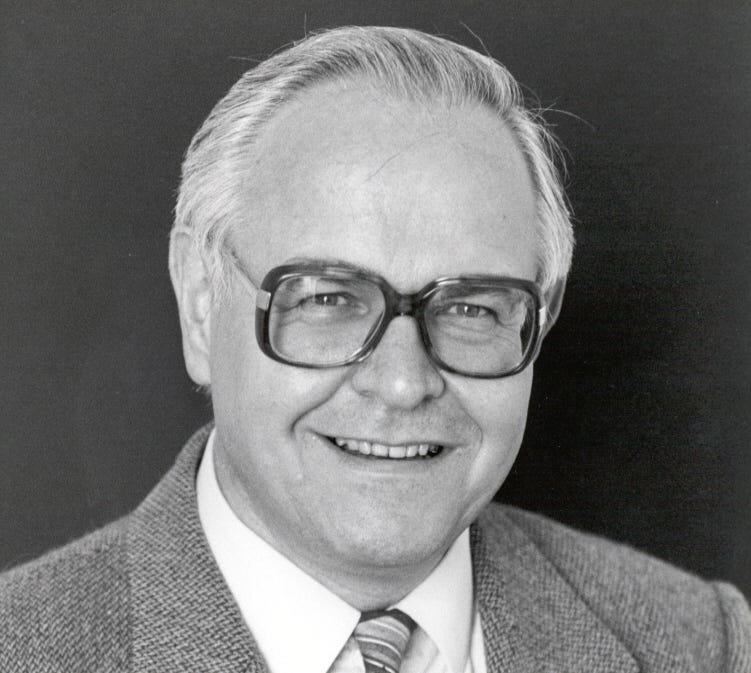
Ahmed Huber was not born “Ahmed,” but was, in fact, born Albert Friedrich Armand Huber in 1927 to a Protestant family in Freiburg, Switzerland. He had converted to Islam in 1962, after having spent most of his adult life in the Swiss Socialist Party, which had brought him into greater contact with Islam through the Party’s support for Algerian independence. As he put it in his interview with George Michael, he was drawn to Islam because “it was an antitheology,” in which “Allah is a declaration of war against all theology,” because “Allah is always greater and greatest and completely different […] beyond all human reason.” Even better, Huber realized, Islam taught “the unity of faith and reason,” and that “there was no church; the only authority and message and of the messenger,” from which “the religious, the political, the social are [all] one, are together.” Enchanted by the promises he saw in this new faith—unlike what he saw as stunted Protestantism and milquetoast liberalism—he made the decision to convert. It was upon his joining the faith, reciting his Shahada in Egypt to the Sheikh Mahmud Shaltut on the invitation of the Egyptian embassy, that Huber’s views on politics started to change, especially the more often he spoke to the more radical Islamists among his new friends. One of those friends was Gamal Abdel Nasser, the pan-Arabist radical and President of Egypt. As Huber recalled:
Nasser explained to me some things about the Third Reich and about the Second World War, and about Adolf Hitler, and some things that I have never known. It was for me a complete culture shock. And then I went back to Switzerland. I was invited to the embassy [again] and there I met a young girl. She was a secretary, and we later married in the private officers’ club of Abdel Nasser. There we got married in August 1963 and from then on I’ve been a Muslim.
Continuing to describe his journey into the faith, Huber recounted that while he began as an Arab nationalist, “the Islamic Revolution in Iran made […] something new out of me.” This deepened his ties to political Islam and through those ties, he eventually met the infamous Ayatollah Khomeini, and even spoke in front of the Iranian parliament. Despite practicing in the Sunni tradition, Huber “became very much touched by Shi’a Islam,” and began to advocate for the Islamic Republic. It was when he returned to Europe from Iran that he was implored by his Iranian contacts to “make contact with right wing movements in order to stop them from attacking Muslims and to speak of common values [that] we have and also of common enemies.”
Huber did ultimately make those contacts, connecting with both European and American right wing extremists over the following decades. This relationship culminated in a bit of a rabbit hole but one that I think is worth delving into at least a little bit to understand the scope of this Green-Brown Alliance phenomenon we’re examining. This involves something called al-Taqwa, later renamed Nada Management in late 2001, which was a financial firm that, according to George Michael, “allegedly funded al-Qaeda,” and “[allegedly] provided assistance [to] Hamas […] and the Muslim Brotherhood.” As Michael explains, “the last known chairman of al-Taqwa is reported to have been Youssef Nada,” hence the name-change; this man matters to our story because, as Michael writes, Nada had connections to the Western far right that “extended back decades,” beginning with his involvement with the Muslim Brotherhood during World War II and acting as a liaison between the Abwehr, or Third Reich intelligence, and the Brotherhood.
Huber fit into this equation in 1988 as one of the founders of al-Taqwa, which registered as an import-export company, but was, according to Swiss authorities, more akin to a terrorist money-laundering operation, with resources moving through the company to nefarious figures like Carlos the Jackal and Osama bin Laden. About two weeks after 9/11, the Bush administration put out Executive Order 13224, which designated over two dozen international entities as supporters of terrorism; a significant number of these entities, including al-Taqwa, were registered to Youssef Nada, the Nazi-Muslim Brotherhood liaison. It was through the investigations that followed EO13224 that Ahmed Huber’s name came up and it was revealed that he had sat on the board of al-Taqwa since its founding in 1988. Thanks to the publicity created by the investigation into al-Taqwa, Huber agreed to a number of interviews and in one with the Jewish Telegraph Agency in November 2001, he admitted that he “met in Beirut on several occasions with bin Laden followers, whom he described as ‘very intelligent and nice guys.’”

More to the point, the same article references the Swiss newspaper Blick’s own reporting that Huber acted as “a go-between for Islamic extremists and neo-Nazis,” and that he believed “the greatest leaders of the 20th century were Hitler and Iran’s late Ayatollah Khomeini,” made evident by the two men’s portraits hanging prominently in his office. When asked about his attendance to a rally for Germany’s neo-Nazi National Democratic Party (which, it should be noted, takes issue with Germany’s newer populist right wing party, Alternative für Deutschland, or AfD, for essentially stealing their thunder) as well as his contacts with them, Huber simply replied, “[The National Democratic Party] are brave people who understand that the Holocaust is a big lie.” When George Michael sat down for his interview with Huber in 2003, the Swiss Muslim convert made his positions even clearer—about as clear as one could—and it is thus worth quoting at length:
I judge as a Muslim, I judge Adolf Hitler and the Third Reich and his movement in a different way than the Zionists, or the Marxists, or the Anglo-Americans do because I know very, very much. I have been studying the sources of what was the Third Reich. And I met a lot of people who knew Hitler personally. I have met his [secretaries], Frau Gertrud Junge, who recently died, and Christa Schroeder. I have met Anton Axman, the last Hitler Youth leader, who brought the corpses of Hitler and Eva Braun to the Reich Chancellery and burnt them. I met a lot of Waffen-SS generals from the Leibstandarte, who personally knew Hitler.
We Muslims were fascinated by the Third Reich in the 1930s because Hitler had some ideas at the political level and the economic level, and the cultural field, which were very close to the political, economic, and cultural sharia. For instance, the economic concept of an interest-free non-capitalist economy is very close to the Islamic concept of the economy. [Hitler’s] idea that art should represent god and not be degenerate and make a cult of ugliness, of lies, and of evil, this corresponds to the cultural sharia, and so on.
So this man and his movement were fascinating to many Muslim intellectuals all during the 1930s. And since 1945, Muslims have been studying all of these things. And we judge him [Hitler] in a different way. Even if now, of course, when the Muslims protest against America, they say Bush equals Hitler, or [Israeli Prime Minister Ariel] Sharon equals Hitler, they say that not for themselves, but [because] they know that it has an impact on Western public opinion. [Emphasis added]
You see, Hitler himself had a quite positive attitude towards Islam. He said several times, “The only religion I respect is Islam. The only prophet I admire is the Prophet Muhammad.” He said several times in his table talks that “After the final war the swastika will rule all over Europe and will represent a new Europe. We will help the Muslims in North Africa and the Middle East to reestablish the Caliphate.” That means there would be an Islamic civilization. [And Hitler said], “In the Far East, there will be the rising sun”—Japan, of course. He didn’t see China [laughs]. He had no thought for China. He only saw Japan with whom he had an alliance. He spoke of a new stability in the world. The swastika, the crescent, and the rising sun would be a new stability. He said in America, people will wake up [as well as] in Latin America and Black Africa. He was against colonialism, you know. After the beginning, in Mein Kampf, there are still some colonialist ideas he had, like all people of his time. But later in the 1930s, especially during the war, he changed.
[…]
I have been around with groups of young people, both Muslims and non-Muslims, and especially what we call the New Right. Sometimes we hold meetings together, Muslims and people from the New Right, to speak about these things and to show what we have in common. I also spoke about this at the University of Tehran. I spoke at a seminar and workshops about these problems. Explaining what was the Third Reich, what it was all about. In London, we had conferences. We had Islamic conferences in the United States between 1988 and 1998, the last time in 1998 in the United States.
[…]
When you talk about this to young Muslims and young right-wing [people], they say there is common ground. The link is a criticism of the so-called modernity of the modern world, which in many ways has gone far away from god. It is against creation. It is against nature. Look for instance at the cult of homosexuality. This is incredible. This is against common sense, against reason, against nature. It is ridiculous. If you look at modern art, it is an insult to reason and an insult to the sense of beauty, which is in every human being.
If this lengthy diatribe started to sound familiar to anyone keyed into the rhetoric of the current New Right, especially online, the reason why should be appearing increasingly obvious: anti-modern radicalism is anti-modern radicalism, whether it comes in Brown or Green.
A more interesting and yet crucial thing for us to highlight here is that unlike David Myatt, and a number of other far right figures who have become converts to the Islamic faith (like Traditionalist René Guénon’s turn toward Sufism), Ahmed Huber came to his far right radicalism from his conversion to Islam. This is fascinating in and of itself, but it is also indicative of how malleable belief systems can be when made radical; how easy it is for one radical ideology to inform and influence the formation of or joining of another, no matter which way around.
However, Huber’s particular experience also allows us to see the real historical origin of this Green-Brown Alliance, and it is a very familiar origin, especially to those who listen to History Impossible. Huber recounted a story directly to Michael during the course of his interview with him for The Enemy of My Enemy, and one that really helps bring the bizarre phenomenon of this Green-Brown Alliance full circle. You see, in the 1960s, as he was becoming more and more invested in his newfound Muslim identity, Huber had traveled to Beirut, where he met with an aging titan of Islamism and, in my opinion at least, the godfather of the Islamist and far right friendship. This titan not only impressed him with his status and prestige, but also with a story seemingly too wild to be true:
The Grand Mufti of Jerusalem, Hajj Amin al-Husseini, who I met in 1965 in Beirut, we had a long talk. He told me many, many interesting things, because he had an almost friendship, [definitely] a relationship, with Adolf Hitler. He told me a fantastic story. On one night in December 1941, after the big victories of Germany over the Soviet Union, he had a long talk with Hitler about architecture, culture, the music of Richard Wagner, and so on. Hitler started talking about race theory and antisemitism and the Grand Mufti asked Hitler, “Did you ever think, Mr. Chancellor, that your race theory comes out of Judaism? It comes out of the Old Testament.” And Hitler was very astonished by that. The Grand Mufti knew the Bible very well. He said, “All of your ideas, the doctrine of the Nazi Party, are in the Old Testament. The chosen people of god are not the chosen people, but the chosen race and that blood carries the soul. And this chosen race must keep its blood pure. It must not mix its blood with non-Jews; the foreigners, the subhuman beasts called the goyim, are inferior to the Jewish master race. The genocide order of God in the fifth book of Moses and in the book of Joshua. The race laws of Ezra and Ishmael. All of these things are in the Old Testament.” Hitler was absolutely astonished, and the Mufti told him [further], “You have not high esteem for the Africans, for Black people. And also this comes from the Old Testament in the first book of Moses, the Black race is doomed, considered by god to eternal slavery. It’s the famous curse by god on Ham, one of the three sons of the prophet Noah.”
So when the Mufti told Hitler another story, he said, “You, Mr. Chancellor, hate the Roman Catholic Church,” [to which] Hitler responded, “Really?” [The Mufti replied], “Yes, it’s true, but you, Mr. Hitler, you never left the Church. You are still formally a member of the Roman Catholic Church.” Then the Mufti added, “Mr. Chancellor, you have organized your Party like the Roman Catholic Church. You are the pope. Your Gauleiters and Reichsleiters are the cardinals and the archbishops. And your Party congresses are [like] high masses—religious ceremonies—which you celebrate as the high priest.” Hitler became furious and walked out. And for three weeks the Mufti could not come back in. After three weeks the Mufti had to go to the Reichschancellary in Berlin, and he told me, “There I thought he [Hitler] would arrest me and shout at me.” Hitler came and smiled at the Mufti, put his hands around his arms, and said, “Your Eminence, I want to apologize to you. I behaved like an uneducated little boy.” He said, “I have read the Bible and thought about what you said and now that final victory is close, Moscow will fall in a few weeks, and the Soviet Union will be gone, and then final victory will come. We must talk about all these things and try to make some changes in our ideology.” And, of course, final victory never came, but Hitler [dictated] a text to Christa Schroeder and Frau Junge, his [secretaries], which is called the Hitler-Bormann Documents, or the Testament to Adolf Hitler. In this text, Hitler makes a criticism of his policies.
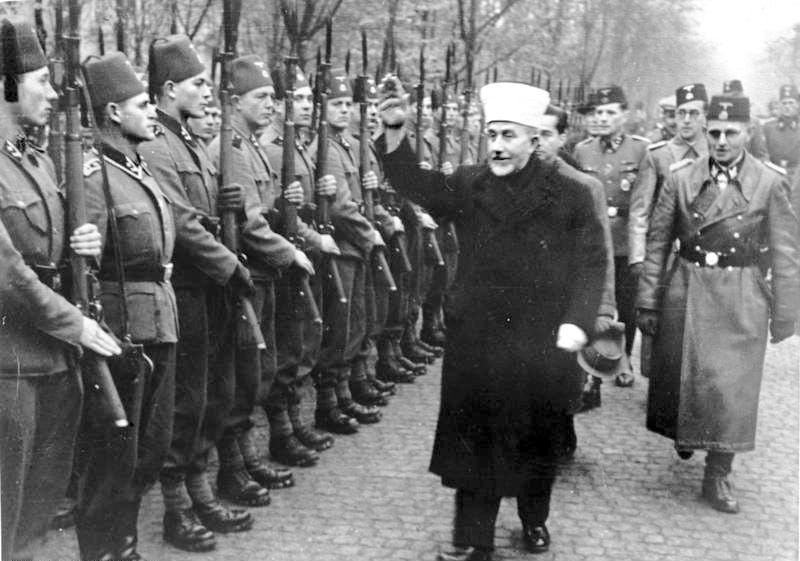
There is literally no way to know whether this second-hand story from Ahmed Huber about Hajj Amin’s encounter with the Fuhrer in December of 1941 has any amount of truth to it; it would certainly be significant to the historiography if proven, since the only confirmed face-to-face encounter between Hajj Amin and Adolf Hitler was their late November 1941 meeting (which is to say nothing of their language barrier, which would require at least one interpreter at all times). However, despite the fact that Huber was not the most trustworthy individual (given his laughable denials of having any financial associations with al-Qaeda) I am inclined to believe that Huber indeed met Hajj Amin and the aging Mufti told this story to Huber in order to impress him. Because it clearly did impress him, and resonate enough for him to regale it to a political science scholar nearly five decades later, significantly earlier than Hajj Amin’s historical profile began to expand in the early 2010s; he had little reason to lie to Michael about hearing this story.
Nevertheless, I do not believe we should take Huber’s story at face value as the unvarnished truth about Hajj Amin’ and Hitler’s relationship, especially since it makes Hajj Amin, in his own eyes, look good. After all, causing Adolf Hitler to apologize and say “I acted like an uneducated little boy” is probably one of the biggest quasi-humble-brags that someone like Hajj Amin could make. And Hajj Amin was, as we have covered before on History Impossible, never exactly forthcoming when it came to telling the truth about his relationship with the Third Reich, especially after the fact. It behooved him to downplay that relationship to anyone but fellow travelers, and when fellow travelers showed up to his door, it behooved him to play it up. Most importantly, however, is that it is also highly unlikely that Hitler would even consider “making some changes to our ideology”—his ideology—because he “read the Bible” for a couple of weeks after getting shaken up by a meeting with a Middle Eastern clerical leader he had, based on Huber’s telling, only met twice. Finally, the document cited by Huber—the so-called “Testament of Adolf Hitler” or “Hitler-Bormann Documents”—has, despite receiving citations from respectable historians like Joachim Fest and Alan Bullock, largely been debunked, thanks to the work done by historian Mikael Nilsson in 2018. Hitler’s only eleventh hour change to his ideology—and I do not really think this was much of a change from Nazism’s nihilistic core—was his open willingness to let Germans die for failing to meet his vision.
The accuracy (or inaccuracy) of all this, interesting though it is (at least to me), is less relevant for our purposes than what it reveals: that the “Green-Brown Alliance” phenomenon goes back exactly to where one, at this point might well expect—the attempted ideological marriage of Islamism and National Socialism. This attempt is obviously well-covered territory on History Impossible does not make this any less significant for our story. In fact, it illuminates yet another historical through-line starting with some bizarre, seemingly new trends in our contemporary era and ending with an equally bizarre story from the Second World War that, until recently, acted as a bit of a strange footnote that bucked every possible assumption about Nazi ideological priorities. And that bizarre story has, for better or worse, taken on far greater significance, especially in the wake of the growing radicalism of the early twenty-first century. This can be seen in a letter written by the Nazi Johann von Leers, who changed his name to Omar Amin von Leers after his postwar conversion. In this letter, written to his friend, the American Nazi agent and fascist, H. Keith Thompson, von Leers saw which way the wind was blowing for anyone who considered themselves an enemy of the New World Order, when he wrote the following:
The Islamic bloc today is the only spiritual power in the world fighting for a real religion and human values and freedom. […] I think sometimes if my nation [Nazi Germany] had got Islam instead of Christianity we should not have had all the traitors we had in World War II, two million women would have been burnt as “witches” by the Christian churches, there would have been no Thirty Years War which destroyed Germany and killed more than half of our nation.
One thing is clear—more and more patriotic Germans join the great Arab revolution against beastly imperialism. […] To hell with Christianity, for in Christianity’s name Germany has been sold to our oppressors. Our place as an oppressed nation under the execrable Western colonialist Bonn government must be on the side of the Arab nationalist revolt against the West. […] I hamd ul Allah! […] Indeed, for our nation there is only one hope—to get rid of Western imperialism by joining the Arab-led anti-imperialist group.

…
In 1979, the Iranian Revolution exploded into being, beginning as a carnival of opposition where the most improbable bedfellows—leftist intellectuals, socialist ideologues, and Islamist agitators—found common cause in toppling a regime they each believed to be beyond saving, thanks to corruption and servility to what the Islamists came to call the Great Satan, i.e. the United States. Many forget—thanks to what the triumphant regime would come to resemble, that in those early days, banners flourished that bore the iconography of Marx and Lenin as readily as the Ayatollah Khomeini, promising a new dawn for the country’s disaffected and dispossessed. Revolutionaries of all types, crowded into clandestine apartments and meeting halls, crafted a fragile unity, convinced that the tyrant’s demise would surely herald a government as diverse and plural as those who rose against it.
But history, ever favoring the cynic, has very little patience for such sentimentalism. When the Shah’s throne was finally toppled, the mullahs proved far less inclined to share power than to consolidate it. The Islamist boot came down, and came down hard, on their former comrades; censorship, suppression of publications, and banning of leftist organizations soon gave way to mass purges and executions (usually accompanied by, perhaps ironically, the most socialist of all mockeries of a liberal justice system, the show trial) with thousands of socialists, communists, and other non-Islamist revolutionaries imprisoned or killed between 1979 and the early 1980s, with some scholars determining it to be upwards of 30,000. In essence, Khomeini’s disciples, having transformed proletarian fury into a clerical dictatorship, offered their supposed comrades not the spoils of revolution, but the gallows (or, in the case of the regime, cranes). The story of the Iranian Revolution of 1979 turned from solidarity to betrayal, as the revolution devoured its own children with a zeal that would have likely looked very familiar to Maximilien Robespierre.
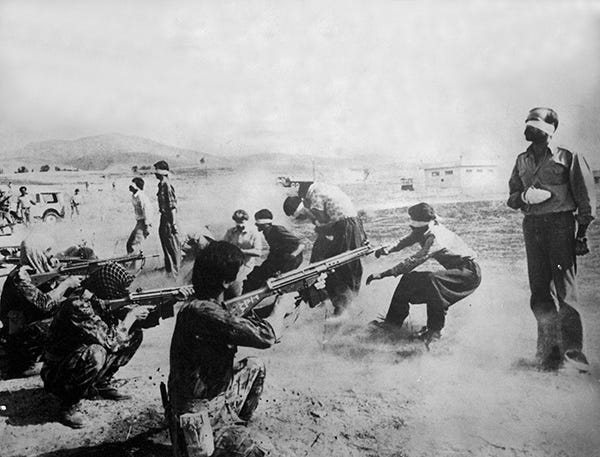
I tell this story to illustrate the core reason why, despite this interesting tale’s implications, it is good to feel skepticism about the long-term prospects of a supposed “Green-Brown Alliance,” or a “Red-Green Alliance,” for that matter. As can be seen from the story of Iran, when the dust settles and the radicals realize it’s now time to fight one another over what is left, this often leads to the self-destruction of that coalition. There may be a darkly amusing irony to that, but in the end, that shared hatred has still been eradicated and untold amounts of collateral damage has likely resulted and will continue to result from the fighting. Running the risk of stating it too bluntly, this seems to be the law of physics that undergirds the principle of “the enemy of my enemy is my friend.”
Thus, it is fair to be skeptical of such alliances bearing any meaningful, long-term fruit. The potential for such a coalition in mainstream politics remains unlikely, especially in Europe. Too many far right and generally right wing governments and political parties—such as AfD in Germany, PVV in the Netherlands, National Rally in France, and Fidesz in Hungary, to name just a few—have made stemming the tide of immigrants from Muslim-majority countries a major plank of their platform. The same has largely been the case with the Republican Party in the United States, though with a broader animus toward immigration seeming to characterize things, especially during the second Trump administration.
This barrier to entry for such an alliance was actually bemoaned by the far right-Islamist figures profiled earlier. Jürgen Graf, while praising Islam, referred to it as too “fundamentally alien to European culture and thought” to be accepted by right wing parties, who he believed needed to understand the tactical alliance more radical Muslims could provide against globalist and Jewish interests. David Myatt claimed that right wing politicians like the Le Pens in France making “political capital” out of taking “an anti-Muslim pose” was “contrary to honor and reason.” Ahmed Huber more charitably called it “a misunderstanding on both sides” and even seems to agree with the idea many immigration skeptics in Europe have expressed—that “many Muslims who come […] did not really integrate in Western society for a simple reason”—but sees this as the obvious failure of Western society on a deeper, moral level; not to integrate these newcomers or even accommodate them, but rather, to submit to the moral structure of Islam and bring them closer to the vision Hitler had for the European continent. Other far right activists and writers like Kevin MacDonald, Sam Francis, and Michael Collins Piper also expressed skepticism—much of it regretful—that such an alliance could be meaningfully formed and maintained.
This is at least partly why it does not really matter how “dangerous” a Green-Brown Alliance actually is, or for that matter, how “dangerous” the oft-observed Red-Green Alliance actually is. Clearly there is more respectability to be found in what has become a functional Red-Green Alliance thanks to the ideological makeup and nature of cultural institutions like academia (as well as a long-standing leftist tradition of supporting the Palestinian cause), while most historically far right ideologies remain relatively discredited regardless of the alliances they make. However, the Western left’s long-standing tradition of taking the so-called “anti-Zionist” position provided enough credibility to fast and loose criticisms of Israel and Israelis, while also delegitimizing criticism of radical Islam, that it clearly helped move the Overton window in such a way that the so-called “Jewish question” could start to actually gain traction from far right figures in the modern day like Nick Fuentes. Nevertheless, neither alliance is, in any meaningful sense, dangerous, at least not yet; at the end of the day, speech is speech and speech is free, at least in the United States. The purpose in noting the Green-Brown Alliance in this essay is not to highlight that it is the “true” danger; it is to highlight intellectual heritage in order to better understand the nature of radicalism.
When it comes down to it, radicalism purports to be about a greater cause, a larger end goal: a utopia. Those causes and goals of utopia certainly exist and are sincere, but the thing is that a utopia has never existed. It has no analogue. The behavioral history and intellectual heritage of radicals does exist, however, and it is always animated by the same impulse: to form contradictory alliances based solely on shared hatred and a desire to eradicate that hatred. In the case of these alliances, that enemy is, indeed, the Jews (whether as people or as a nation) though there are larger, more abstract forces and symbols they all oppose—capitalism, globalism, the West.
These three forces and symbols represent the antithesis to all three totalitarianisms’ ideas of utopia, and that matters far more than the fundamental differences between their respective utopias. It is the powerful critiques of these forces that attracts people to totalitarian ideology, but seeing this unity of purpose between contradictory ideological projects reveals that the appeals only really work in ideological isolation; when it is made obvious what the shared DNA—or political psychological impulse—is with all these ideologies, it might start to seem less appealing, at least to the more thoughtful among us. Thus, understanding the common ground that these ideologies can forge despite their fundamental differences is what helps discredit them, at least for anyone who appreciates what remains of liberal values.
Unfortunately, many people—particularly those drawn toward contrarianism and an unwillingness to modify or even let go their beliefs they hold dear—will be more likely to see something compelling in these disparate ideologies sharing their hatreds. “If they can all agree on what the problem is,” this hypothetical person reasons, “then they must be onto something!” This is a tempting fiction, because it is a compelling story, especially in the heat of the moment. Maybe it will continue to be a tempting fiction, especially in our age of seeking novelty, both in ourselves and in the content we consume. Contradiction—aesthetic, ideological, or otherwise—is indeed novel, and humans do not appear to be in any hurry to get over that tendency. And yet, behind the novelty lies a very familiar tale. And that story has been told many, many times throughout history and it rarely, if ever, looks appealing.
That is why another, more particular story from 1794, and in France of all places, comes to mind. Despite the time and place, and despite how our culture has tended to regard this time and place, it is not a romantic story. In fact, it carries with it the same stark nastiness as most stories involving revolution or civil war or other things for which our contemporary radicals appear to constantly yearn. Much had happened to lead to this story, and much followed, but I have always believed this particular moment in France’s famous—or infamous—revolution serves as a great object lesson, perhaps reality check, for those among us that believe the way of the radical, contradictory alliances based on shared hatreds and all, is the only way forward.
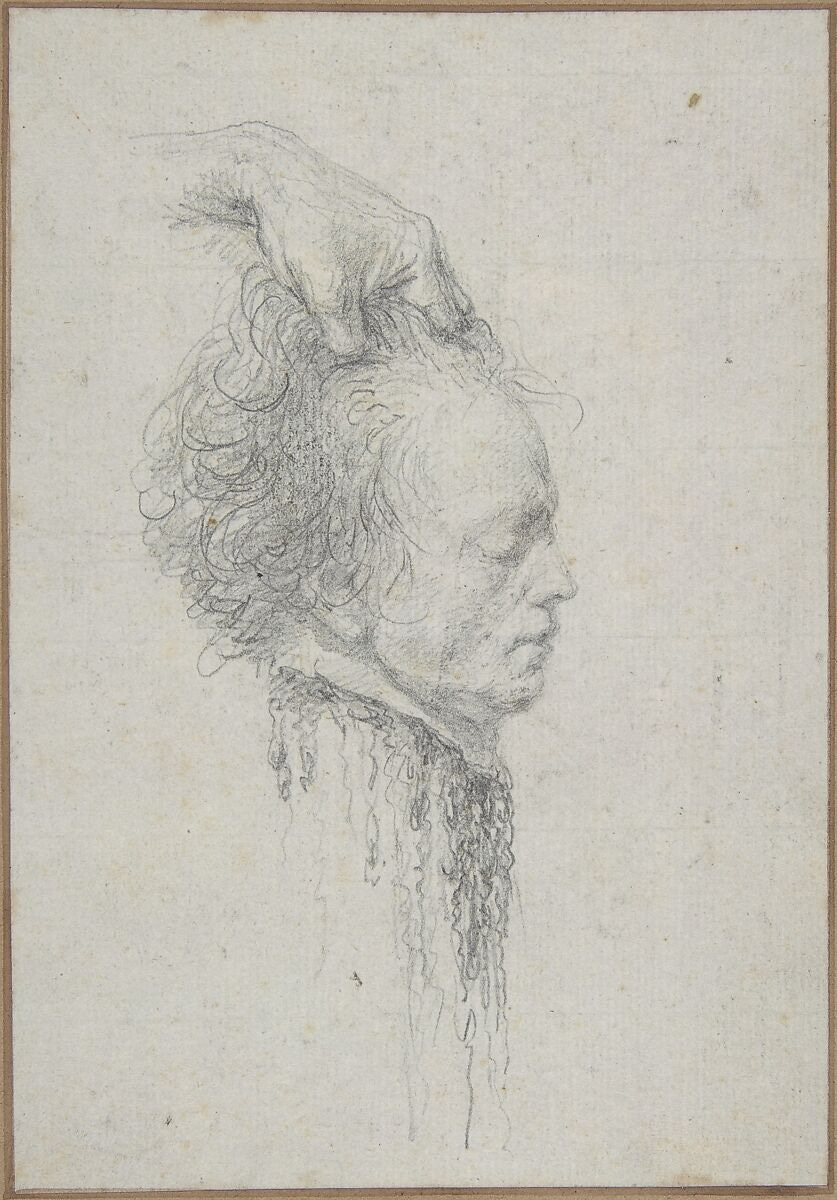
When he was placed upon the execution platform, about to have his head removed from his body, the radical French Revolutionary Maximilien Robespierre, did not deliver a moving speech, or utter any famous last words of defiance against those he might have once considered friends and comrades. In fact, he did not say any words at all. Robespierre had tried to shoot himself to escape justice, but only managed to shatter and mangle his jaw in the process. His face had been wrapped in bandages to keep his jaw in place after a military doctor removed a few of his teeth and pieces of the jawbone for posterity. When he arrived at the guillotine, the executioner removed the bandage, no words left the revolutionary. Instead, all that was heard was a primal scream of pain.
Keneally and Manzi report: “One of the analyzed channels shared details on Israel-based substations, including specific location coordinates. One neo-Nazi accelerationist channel, now disabled, posted a guide on how to sabotage electrical substations in Israel, which included an open infrared map of electrical substation sites in Israel and read: ‘If America can shut down with 9 substations as a large-scale country, imagine Israel as it is a short-scale country.’”