


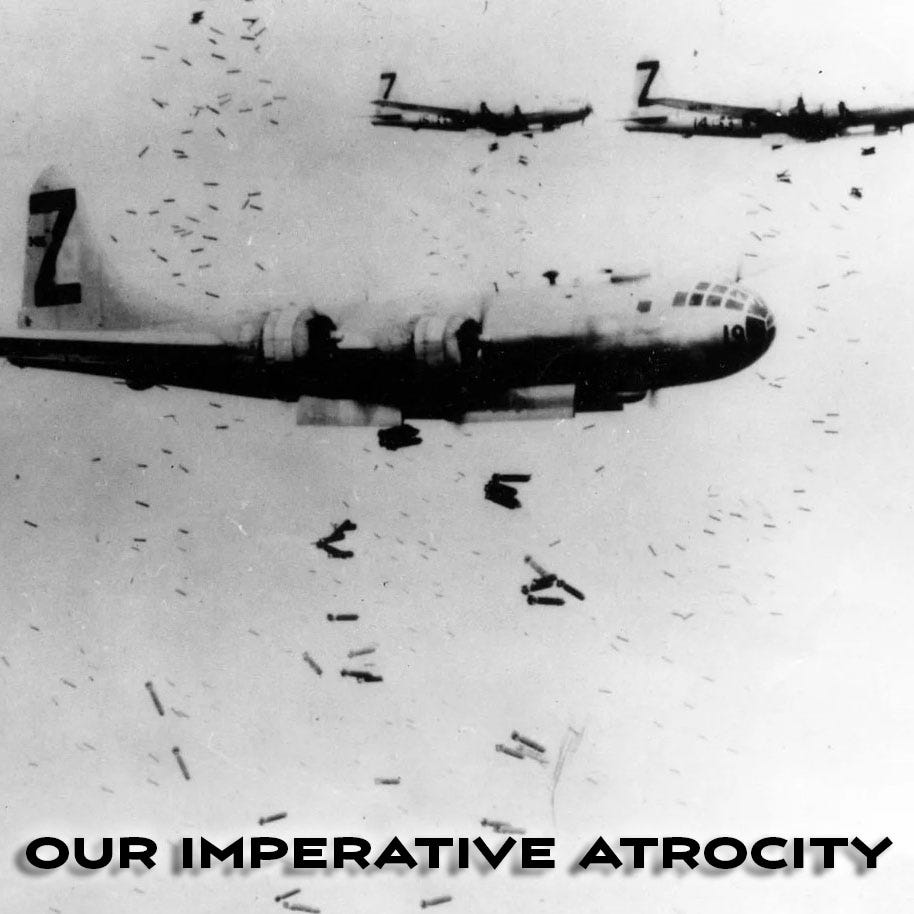
We often hear about how the Second World War was more morally nuanced and complex than we have been led to believe. This is, to a certain extent, very true. The Axis powers meted out a level of genocidal destruction and suffering upon tens of millions of people across the world, decimating generations in places as far flung as Poland and the Philippines, and Croatia and China. To call their actions existential by their very nature is to arguably undersell the threat they posed. The Allies realized these were the stakes and were eventually faced with a very real question: what would it take to stop such a threat? It required what many have come to believe was the unthinkable: meeting destruction with destruction. And in meeting the Axis violence with more violence did indeed bring the war to its ultimate end.
But was it the right thing to do?
This episode of History Impossible aims to address that question, one that has vexed generations of historians and commentators, and inflamed debates that last until this very day. The immense fury with which Allied air forces pummeled German cities, particularly Dresden and Hamburg, has been well-covered, including on this very program. But perhaps the most shocking devastation came on the night of March 9-10, 1945, when the United States Army Air Force conducted a daring raid over Tokyo, resulting in a death toll that dwarfed even that created by the atomic bombs dropped on Hiroshima and Nagasaki several months later. The fires of war became more literal than they had ever been, and it had all been part of a deliberate campaign to crush the spirit of the Japanese. The bombers, and eventually the United States, accomplished their mission to bring the Empire of Japan to its knees. The suffering of the millions under Hirohito’s boot would be brought to an end. But at what cost?
Many will go into this story with an answer to that question in the affirmative or negative at the ready. I thought I did. I came out the other side less certain, and I hope all of you who listen do as well. Because uncertainty should is something with which we should all be more comfortable, especially when it comes to the subject of war, even when we make defensible decisions.