


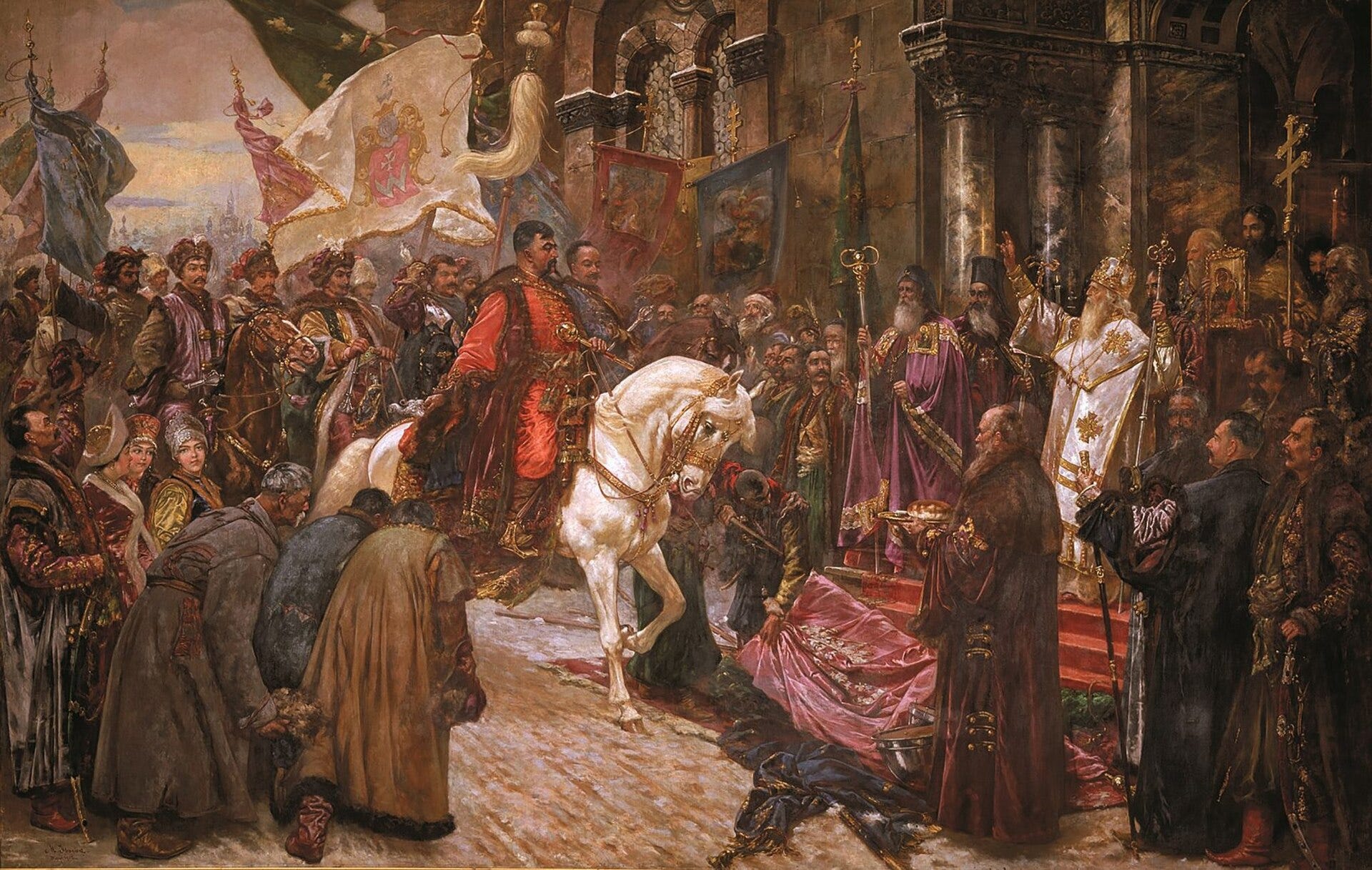
The prelude to Russia’s 2022 invasion to Ukraine was not as much the massing of troops on the border (or even the supposedly perceived threat of NATO expansion) as much as it was the ideas bouncing around a one Vladimir Putin’s head that compelled him to publish his essay, “On the Historical Unity of Russians and Ukrainians” on July 12th, 2021. In the meandering 5,000 or so words that followed the provocative title, Putin claimed that “Russians and Ukrainians were one people – a single whole,” pointing to a supposedly once-unified people known as the Rus. While Putin’s overall claims have been soundly challenged, his invocation of the Rus is actually part of a tradition in both Russian and Ukrainian nationalism, made most clear by a somewhat mysterious document under the title The History of the Rus’, whose author, to this day, remains unknown.
In 2012, a good decade before Putin launched the most recent incarnation of the Russo-Ukrainian War (but only two years before he launched its first phase, which resulted in the occupation and annexation of Crimea), Ukrainian-American historian Serhii Plokhy published The Cossack Myth: History and Nationhood in the Age of Empires, which examined the origins of this document and its significance to Russian history, Ukrainian history, and generally, the history of national ideas and the myriad ways in which they are created. Like many accomplished modern scholars of nationhood and nationalism, Plokhy challenged many preconceived notions about how such events come about and calls into question many of the assumptions being made by figures such as Putin, while also charting the origins of Ukrainian national pride. This is no small feat, especially for a book that feels eerily prescient given more recent events.
The origins of many national ideas are well-known, often seen as “founding myths” in which unvarnished truth gives way to elaborate and romantic fantasy. Sometimes, however, the origins of these myths are shrouded in mystery, as was the case of the document at the center of The Cossack Myth. The History of the Rus’ manuscript has long-fascinated many scholars of Ukrainian history, both in Ukraine proper and in Russia. This often manifested in a centuries-long search for the mysterious author (or authors) of this document, but it also revealed the concerns and beliefs of those concerned with the idea of a Ukrainian (or Cossack) nation. This is the central concern of Plokhy’s work: determining the extent to which the manuscript helped shape Ukrainian national identity by looking at the interpretations of the text and the attempts to uncover the author’s identity at various points in Ukrainian and Russian history. As Plokhy writes, “The History of the Rus’ is complex in its composition and multiplicity of meanings, but it also fits some of the classic schemas of modern national development very well,” because it “made its first appearance around the time when, according to Miroslav Hroch’s three-stage model of the growth of national movements, the Ukrainian national project embarked on its heritage-gathering stage.”1 In other words, who wrote the manuscript certainly mattered, but it was equally important where, when, and ultimately why it was created in the first place.
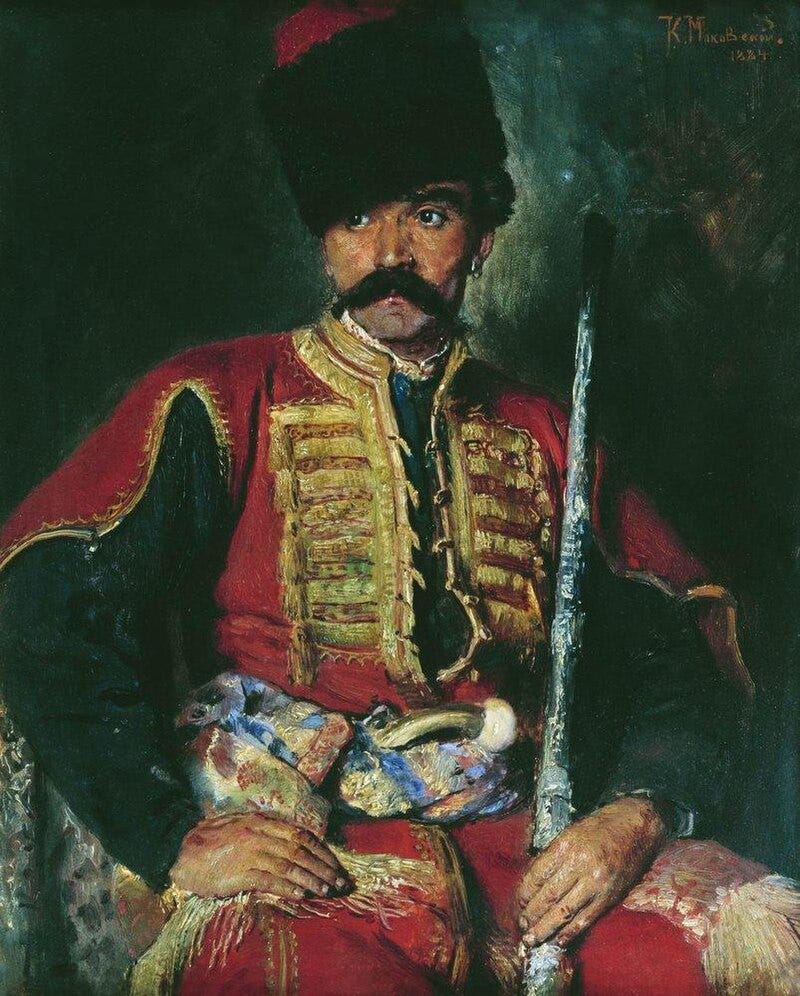
There is a dizzying array of names at work in Plokhy’s analysis, with the interpretations of the manuscript coming from a cast of characters as diverse as Gogol, Pushkin, Ryleev, and Shevchenko serving as focal points throughout the work, but in order to demonstrate the importance of these names and their interpretations, he emphasizes other aspects such as setting and genre. As Plokhy emphasizes, “it would be hard to imagine a more appropriate time for the appearance of the History of the Rus’,” thanks to the year 1818—the first known date of the manuscript’s actual appearance—serving as one “crucial for Ukrainian national development.”2 Plokhy points to several cultural touchstones around that time, including a proliferation of Ukrainian poetry and folk songs that helped instill a notion that a shared heritage was being compiled. For example, he points to Kondratii Ryleev publishing a selection of poetry under the name Dumy between 1821 and 1823 that was partly inspired by the folk song collection published by Nikolai Tsertelev in 1819, and in so doing, proclaiming in its introduction that “‘The [dumy] is an ancient inheritance from our southern brethren—our own native Russian invention.’”3 Plokhy is careful not to claim that such developments never occurred before, later pointing out that Cossack-descendant Vasyl Lomykovsky had been “engaged in the collection of Ukrainian songs long before the publication of Tsertelev’s collection,” but the point remains that the time period was a fertile one; a moment of nascent national culmination.4
Ploky’s emphasis on genre is also noteworthy because he points out that from the beginning, the History of the Rus’ manuscript was to serve its purpose as a “national history,” admitted as such by the anonymous author, who planned to “turn the history of the Cossacks as a corporate estate and a political entity [...] into the story of a nation.”5 In other words, what set this manuscript apart from previous attempts to add a sense of cohesion to the Cossacks is that it created something out of an identifiable group, which was, in this case, an ethnicity that stood contrasted against other, rival groups, including “Great Russians,” Polish nobles, and Jewish merchants. It would be reductive to say that national identity merely requires the presence of an Other of some kind in order to define itself, but it clearly was part of the equation with the History of the Rus’ manuscript.
However, Plokhy does not content himself with explaining the manuscript’s author as a nationalist in the way we would imagine him to be in the twenty-first century. As he explains, the author clearly and repeatedly shows disdain for the lower classes, essentially restricting this Cossack national identity to the Cossacks themselves—a nobility class—and not to the lowly peasant classes of Little Russia. Plokhy notes that this was hardly consistent, as was clear with the manuscript author’s treatment of the Mazepa revolt and the Battle of Poltava of 1709, in which he portrays the principal figure of the revolt—Ivan Mazepa—and what he represented in contradictory terms. As Plokhy writes, “the author was prepared to judge his protagonist’s actions by the level of public support that they generated,” despite consistently depicting that very same public “as xenophobic, superstitious, and uncivilized.”6 The author of the manuscript may not have been a typical nationalist, but in an effort to serve his own agenda of creating a national identity for the Cossacks, he showed little restraint when it came to double standards.
Plokhy adds an interesting wrinkle to the question of national identity via the History of the Rus’ manuscript by taking the above argument even further and looking at the manuscript from a more imperial context. Thanks to the integration of the Cossacks into the more elite parts of the Russian Empire—as evidenced by the text’s use of language—the author of the text “linked the hereditary Cossack elite with the Russian imperial core but separated it from its own people,” thus situating the Cossacks among the true nonpareil of Russian society.7 As Polkhy astutely notes later, by doing this, the History of the Rus’ “emerge [...] as not only historically superior to Great Russia but also more Russian than the Russians themselves,” leading to the manuscript becoming “a starting point for a number of historiographic excursions that led to separate national narratives.”8 This is somewhat a departure from what one is typically exposed when studying the origins of national narratives—that is, the appropriation of the imperial core’s own identity—but Plokhy makes it very clear that this is by no means unusual. This can be seen when looking at the manuscript’s use of the character of Bodhan Khmelnytsky (and his son Yurii). While their use in a history of the Cossacks is nothing unusual given their joint role in “enumerating the rights and privileges granted to the Cossack officers in Moscow,” which served as the foundation for “Cossack legal and historical identity in the Russian Empire,” Plokhy points out that “making both of them highly positive figures” reinforces the place that the author of the manuscript wished to place Cossackdom—again, as more Russian than Russians.9
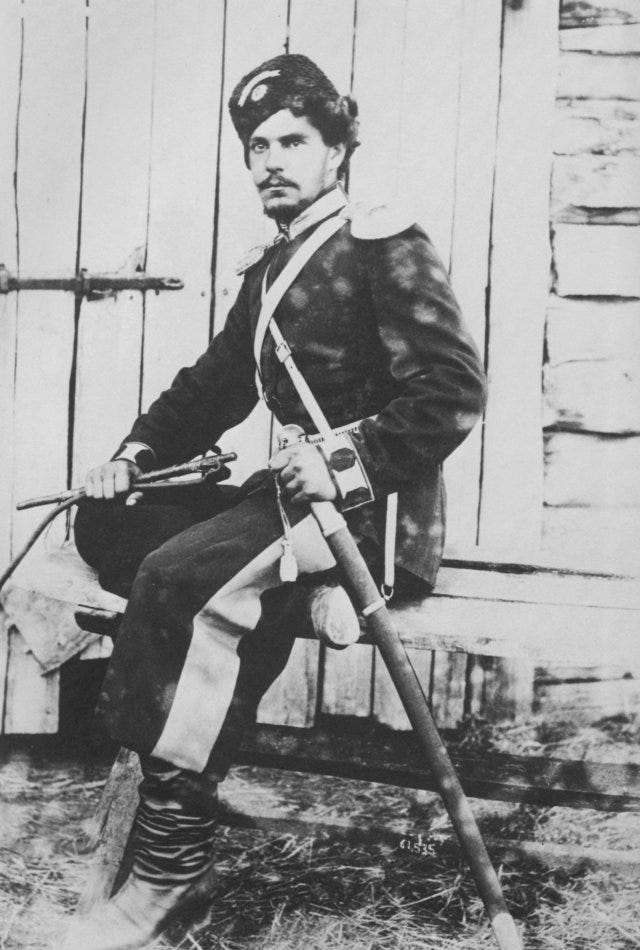
There is certainly an irony at play when considering this because of the importance the text has taken on over the years while informing modern Ukrainian identity. This is thanks to the most relevant frame to the study of national identity that Plokhy applies to the History of the Rus’ manuscript: that of mystification. Plokhy points to the fact that the author attributed “the monastic origins,” not simply “to cover his tracks but to authenticate the forgery and endow the manuscript with an authority that his own name could hardly provide.”10 Why else would one do this with something explicitly laid out to be a project in national development? It calls to mind Anthony D. Smith’s observations about the importance of myths and symbols when creating a national idea, giving the intended readership of the manuscript a deeper sense of nationhood more akin to “a soul, a spiritual principle,” to use the words of Ernest Renan.11 Plokhy makes comparisons to the works of other Romantic era writers like James Macpherson and Václav Hanka to support this point, explaining that the features their work share with the History of the Rus’ “typify the genre” of the national mythology.12 Regardless of the writer’s elitism or selective approach to applying national identity or imperial inclinations, the effort he made in the manuscript’s creation makes it very clear he was seeking what scholars of nationhood like Renan, Hroch, and Smith would all describe many years later.
The importance of the History of the Rus’ lies not just in its idiosyncrasies and the mystery of its authorship, but in the adaptability of it as a document to serve the purposes of its readers. As Plokhy notes, “the History also made the Cossack myth available to a new generation of Ukrainian intellectuals,” with the Brotherhood of SS. Cyril and Methodius members “redefin[ing] it in their own terms.”13 This continued not just throughout the twentieth century—despite hitches occurring thanks to Soviet distrust of national ideas and mythologies that were not their own—but even now well into the twenty-first. The reality of Ukrainian identity has been existentially called into question by the actions of the Russian Federation under Vladimir Putin, but as Plokhy writes in his conclusion, “the Cossack myth is the only feature of historical memory that remains unchallenged [within Ukraine] at the level of mass identity.”14 While the question of Ukrainian and Russian identity within Ukraine’s borders remains contentious, the region contains a shared past that, while certainly documented in many ways over the centuries, was crystalized thanks to the efforts of an unknown writer in the early nineteenth century. As Plokhy explains, present-day Ukraine (as of 2012 at least) has “relatively little to do with its representation in the History of the Rus’,” but it “serves to assert Ukraine’s historical uniqueness and independence.”15 Given recent events—namely Putin’s war of expansion and, in his mind, reclamation—this is hard to dispute.
Footnotes:
1 . Serhii Plokhy, The Cossack Myth: History and Nationhood in the Age of Empires (New York: Cambridge University Press, 2012), 353.
2 . Ibid.
3 . Ibid., 23.
4 . Ibid., 265.
5 . Ibid., 366.
6 . Ibid., 195.
7 . Ibid., 357.
8 . Ibid., 358.
9 . Ibid., 181.
10 . Ibid., 360.
11 . Ernest Renan, “What is a Nation?” in Becoming National: A Reader eds. Geoff Eley & Ronald Grigor Suny (Oxford: Oxford University Press, 1996), 52.
12 . Plokhy, The Cossack Myth, 11.
13 . Ibid., 365.
14 . Ibid., 366.
15 . Ibid.
Bibliography
Plokhy, Serhii. The Cossack Myth: History and Nationhood in the Age of Empires. New York: Cambridge University Press, 2012.
Renan, Ernest. “What is a Nation?” in Becoming National: A Reader. Edited by Geoff Eley and Ronald G. Suny, 41-55. Oxford: Oxford University Press, 1996.
As a Ukrainian I'd like to comment on Gogol as he is such a fascinating writer, and both we and russians claim ownership to this author. Yes, he worked from St. Petersburg, but was born on Ukrainian soil and wrote solely about Ukrainian culture and folklore. Sure, a lot of it is shared, but there is no hiding that he did write specifically about Ukrainians.
A comment on Mazepa as well -- he lead what I cannot characterise as a fully-fledged revolt per se. Sweedish forces were attacking Russian Empire and were in full march over his territory. He did what was common at feudal times -- if your current suzerain cannot protect you, you swear oath to another suzerain. Ultimately, it did not pay out and Peter I did make much too big of a deal of that. He desperately wanted to shift picture of Russia of that time into a more modern, westernised nation and as such he invited a lot of German and Dutch and so on personel into his empire. He saw Mazepa as a representative of that culture, that military tradition and so was quite fascinated by his persona. When he did what is exactly expected from that military tradition, he couldn't get over his tribalistic notions of "solidarity". He used his case to further crack down on separatism within his empire and solidify his rule, as Russian empire was only beginning to grow in strength at that time. That's why Mazepa persona is so heavily discussed in contemporary literature.
I would also like to add that Cossack mythology was, curiously, actively endorsed by Soviets themselves during second world war. It is a common practice to use the glory of past military victories as a morale booster in the future wars. And Soviet policy was a merry-go-round, with periods of bolstering national identity and periods of crackdowns.
Thanks for bringing light to Ukraine into your corner of the world!
Thank you for this review. I'll be waiting for the expanded podcast version?